CPR Metronome
Maintain the correct rhythm for chest compressions. 110 beats per minute (AHA recommendation: 100-120 BPM).
Important warning
This tool is a rhythm aid. It does not replace certified training in basic life support. In an emergency, always call 112.
110 BPM (30:2 cycle)
0
READY
00:00
Time
0
30:2 cycles
0
Compressions
When to start CPR
Recognizing cardiac arrest
You should start CPR when the victim shows all of these signs:
- Unresponsive to stimuli (shake shoulders, call out loudly)
- Not breathing normally (no chest movements, no air on face). Gasping (agonal breathing) is NOT normal breathing.
What to do:
- Call 112 (or ask someone to call)
- Request an AED (defibrillator) if available
- Start chest compressions immediately
- 30 compressions, 2 breaths, repeat until INEM (National Institute of Medical Emergency) arrives
Correct compression technique
Positioning
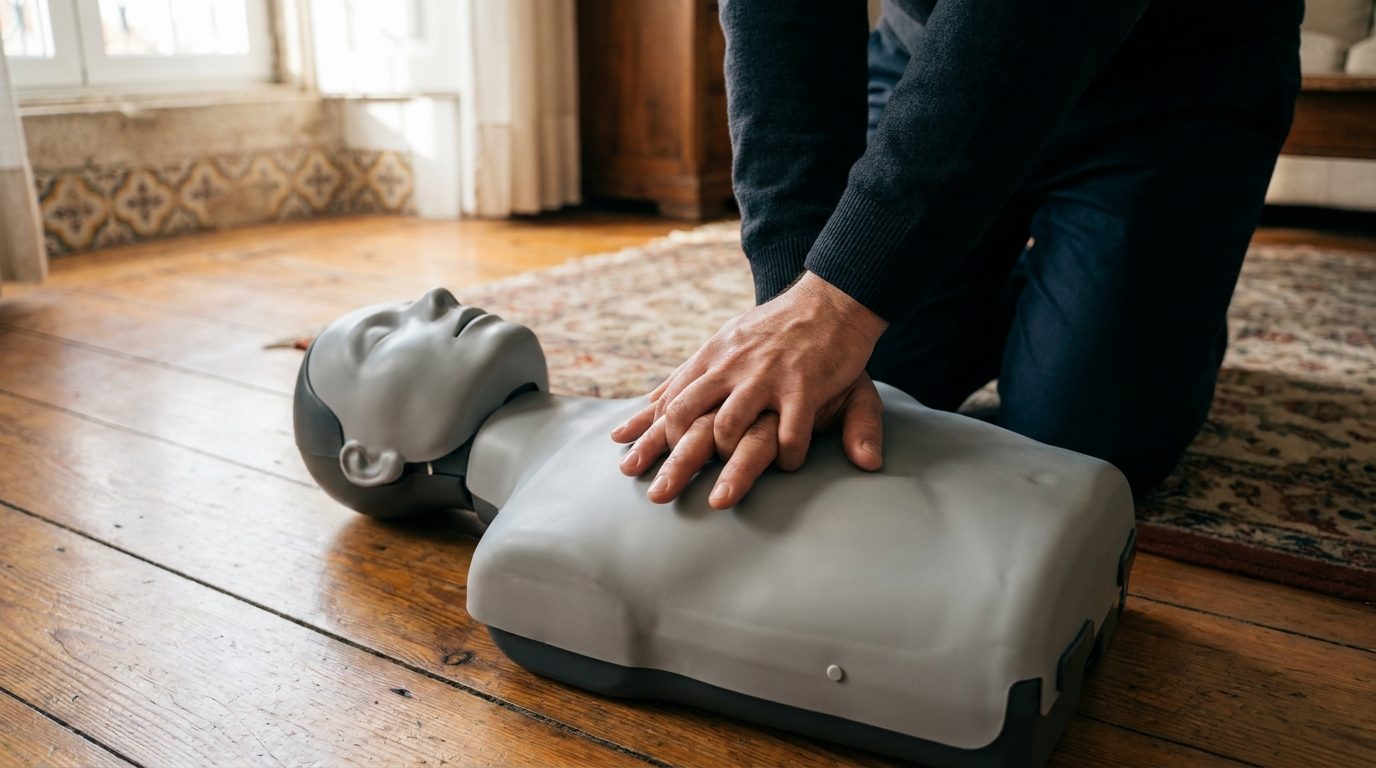
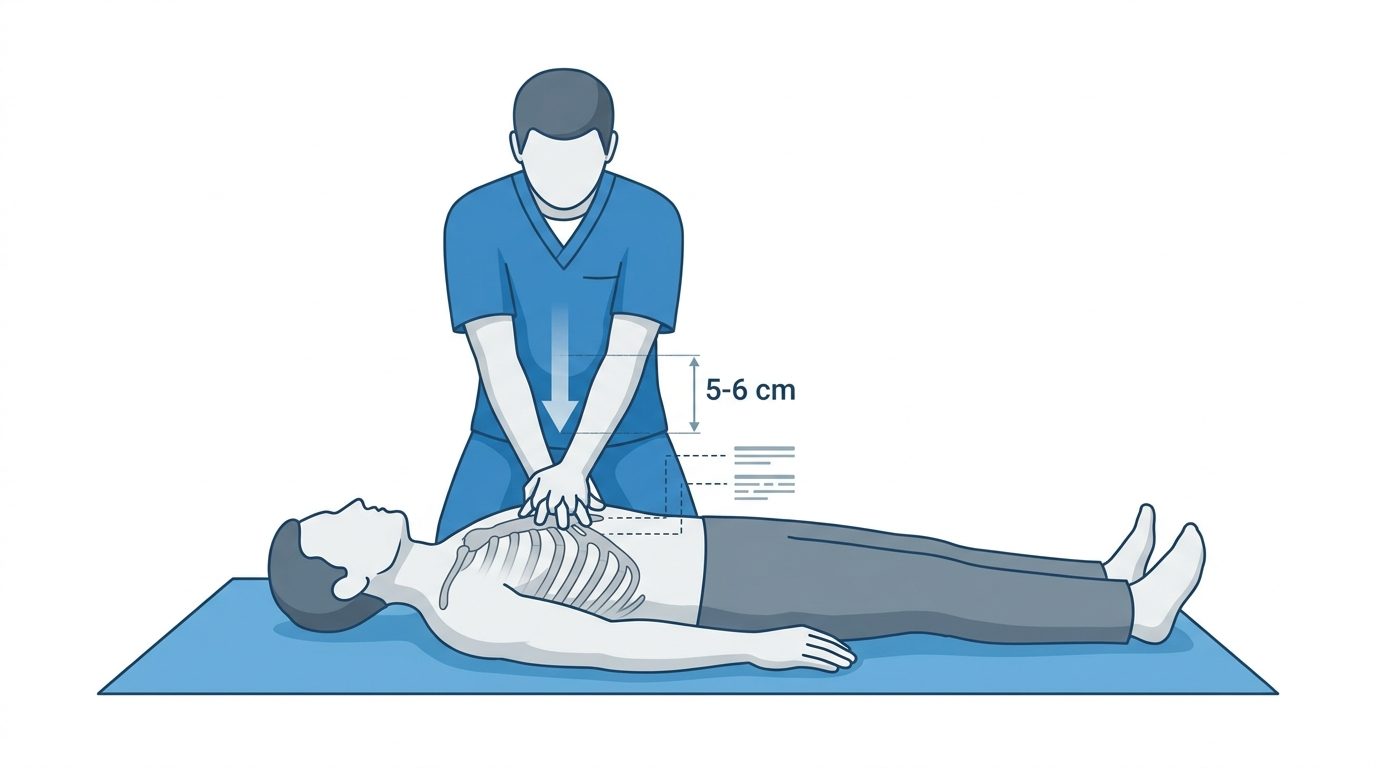
- Where: Centre of chest, on lower half of breastbone
- Hands: Heel of one hand on chest, other hand on top, fingers interlaced
- Arms: Straight, shoulders directly above hands
- Body: Use body weight, not just arm strength
Critical parameters
- Depth: 5 to 6 cm (adult)
- Rate: 100 to 120 compressions per minute
- Recoil: Allow full chest recoil between compressions
- Interruptions: Minimize pauses (maximum 10 seconds for breaths)
If you are unwilling or unable to give breaths
Continuous compressions without breaths (called "hands-only CPR") are much better than doing nothing. Continue compressions without stopping until INEM arrives. This metronome can be used in continuous mode, ignoring the ventilation pauses.
Learn more
Deepen your knowledge
- Complete first aid guide with recovery position, Heimlich manoeuvre, bleeding, burns and fractures
- Take an in-person Basic Life Support course (Red Cross, INEM, local fire brigade)
- Call 112 in any emergency. The operator can guide you through CPR over the phone.