Gas leaks
Gas leaks and chemical emergencies in the home can be life-threatening. Knowing the types of gas used in Portugal, how to detect a leak, and what to do (and what never to do) can prevent explosions, fires, and poisoning.
If you smell gas: do NOT use any electrical switches
A single spark from a light switch, doorbell, phone, or even a cigarette lighter can ignite a gas-filled room. Open windows, turn off the gas supply at the valve, leave the building, and call 112 from outside.
Types of gas in Portugal
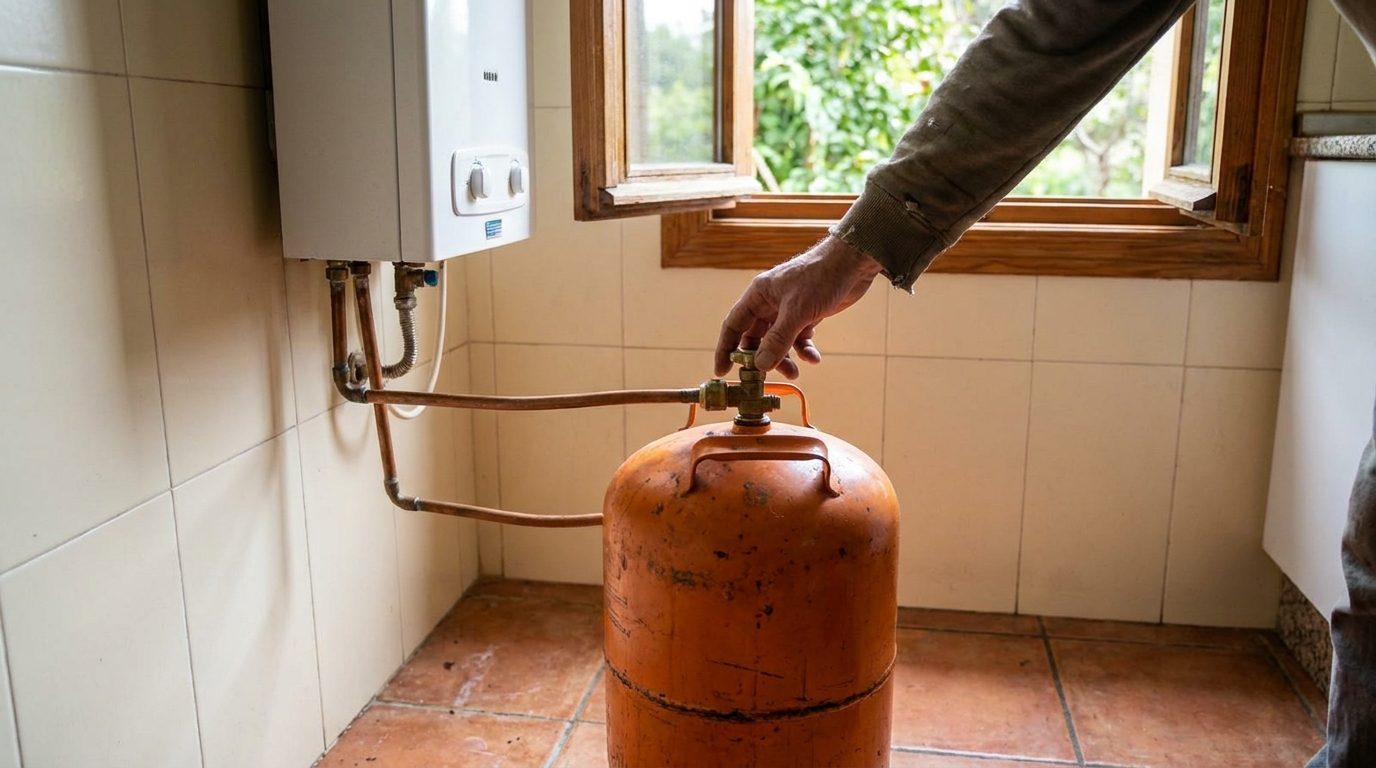
Butane (bottled gas)
- Most common in Portuguese homes, especially older buildings
- Supplied in bottles: 13 kg (standard) or 6 kg (camping)
- Heavier than air: if leaking, butane sinks and accumulates at floor level
- Odorised: a strong, unpleasant smell is added for safety
- Used for: cooking, water heating
Propane (bottled gas)
- Used in larger installations: rural homes, restaurants, industrial kitchens
- Stored in larger bottles (45 kg) or external tanks
- Heavier than air: same risk as butane, accumulates low
- Odorised: has a distinctive chemical smell
- Works at lower temperatures than butane (reliable in winter)
Natural gas (piped)
- Piped supply: available in Lisbon, Porto, and some other cities
- Lighter than air: rises and disperses, unlike butane/propane
- Odorised: mercaptan (rotten egg smell) added for detection
- Continuous supply: no bottles to change, but no way to "run out" and stop a leak naturally
- Emergency shut-off: usually a valve near the meter, often in the building hallway
Signs of a gas leak
Smell
- Rotten egg or chemical smell: all domestic gas in Portugal is odorised. If you smell it, there is a leak
- Near the bottle or meter: check connections, hoses, and valves
- In a closed room: this is urgent. Open windows immediately
- Note: some people, especially the elderly, have a reduced sense of smell. A gas detector is essential
Other signs
- Hissing sound: from a bottle, pipe, or connection
- Dead vegetation: plants near a piped gas line dying without explanation
- Bubbles: apply soapy water to a suspect connection. Bubbles confirm a leak
- Yellow or orange flame: gas appliances should burn blue. A yellow or orange flame indicates incomplete combustion (CO risk)
- Black marks or soot: on or around a gas appliance
- Condensation: unusual moisture on windows near a gas appliance
Immediate actions
If you suspect a gas leak
- Do NOT switch anything on or off: no lights, no switches, no phones, no doorbells
- Do NOT light matches, cigarettes, or any flame
- Open all windows and doors: create cross-ventilation to disperse the gas
- Turn off the gas supply: close the valve on the gas bottle, or the main shut-off valve for piped gas
- Leave the building: take everyone with you, including pets
- Call 112 from outside: never use a phone inside a gas-filled space
- Do not re-enter until the fire brigade declares it safe
- Warn neighbours: especially in apartments, gas can travel between floors
What NEVER to do
Electrical sparks
- Never turn lights on or off: the switch mechanism creates a spark
- Never plug in or unplug appliances: another spark source
- Never use the doorbell: it generates an electrical arc
- Never use a mobile phone indoors: while the risk is very small with modern phones, call from outside as a precaution
- Never use the lift: electrical contacts in lift mechanisms can spark
Other dangers
- Never try to find the leak with a flame: this causes explosions. Use soapy water
- Never ignore the smell: even a faint gas smell requires investigation
- Never seal a room: gas must be ventilated out, not trapped
- Never attempt to repair gas installations yourself: only certified technicians (instaladores de gas) are legally authorised
- Never store gas bottles in basements or cellars: if they leak, the gas accumulates in the lowest point
Carbon monoxide (CO) poisoning
The silent killer
- CO is odourless, colourless, and tasteless. You cannot detect it without a detector
- Sources: gas water heaters, boilers, fireplaces, braziers (braseiras), blocked chimneys, portable generators running indoors
- Mechanism: CO binds to haemoglobin 200 times more strongly than oxygen, starving the body of oxygen
- Most common in winter: when heating devices are used in poorly ventilated rooms
- Portugal context: braziers (braseiras) in rural areas are responsible for many CO deaths every winter
Symptoms of CO poisoning
- Mild: headache, dizziness, nausea, tiredness (often mistaken for flu)
- Moderate: confusion, difficulty thinking, blurred vision, shortness of breath, chest pain
- Severe: loss of consciousness, seizures, cardiac arrest, death
- Key clue: if symptoms improve when you leave the house and return when you go back inside, suspect CO
- Multiple people affected: if everyone in the household has similar symptoms, it is likely CO
If you suspect CO poisoning
Open all windows, turn off gas appliances, evacuate immediately, and call 112. If someone is unconscious, move them outside and begin CPR if not breathing. CO poisoning requires hospital treatment with high-flow oxygen.
Prevention
Gas installations
- Annual inspection: have your gas installation inspected by a certified technician every year
- Gas hoses: replace rubber hoses every 5 years (check the date printed on the hose). Metal braided hoses last longer
- Regulator: replace the gas regulator every 10 years
- Ventilation: never block ventilation grilles in kitchens or bathrooms. They are there for a reason
- Appliance servicing: have gas boilers and water heaters serviced annually
- Bottle storage: keep gas bottles upright, in a ventilated area, away from heat and direct sunlight
Gas and CO detectors
- Gas detector: install near gas appliances, at the appropriate height (low for butane/propane, high for natural gas)
- CO detector: install in sleeping areas and near combustion appliances. Test monthly
- Battery check: replace batteries annually (or use sealed 10-year units)
- Replace detectors: every 5 to 7 years (sensors degrade over time)
- Cost: EUR 15 to 30 per detector. A small price for life-saving protection
- Avoid the kitchen: cooking fumes cause false alarms. Place at least 1.5 m from the cooker
Domestic chemical emergencies
Dangerous chemical mixtures
- Bleach + ammonia: produces chloramine gas (toxic fumes). Never mix cleaning products containing these
- Bleach + vinegar: releases chlorine gas. Irritates eyes, throat, and lungs
- Bleach + rubbing alcohol: produces chloroform and other toxic compounds
- Hydrogen peroxide + vinegar: creates peracetic acid (corrosive)
Rule of thumb
Never mix cleaning products. Use one product at a time, rinse thoroughly between products, and always ventilate the area.
If exposed to chemical fumes
- Leave the area immediately: get to fresh air
- Open windows and doors: ventilate the space
- If eyes are affected: rinse with clean running water for at least 15 minutes
- If skin is affected: remove contaminated clothing, wash skin with plenty of water and soap
- If inhaled: move to fresh air, sit upright to ease breathing
- Call CIAV: 800 250 250 (Poison Information Centre, free, 24 hours)
- Call 112 if there is difficulty breathing, loss of consciousness, or severe symptoms
Emergency contacts
Who to call
- 112: European emergency number (fire brigade, INEM, police)
- 800 250 250: CIAV (Poison Information Centre, 24 hours, free)
- 808 24 24 24: SNS 24 (Portuguese health line)
- Gas supplier emergency line: check your gas bill or bottle label for the 24-hour contact number
- All emergency contacts
Related guides
For home fire safety, see our home fires guide. For apartment-specific safety, see apartment preparedness. For first aid, see the first aid guide.