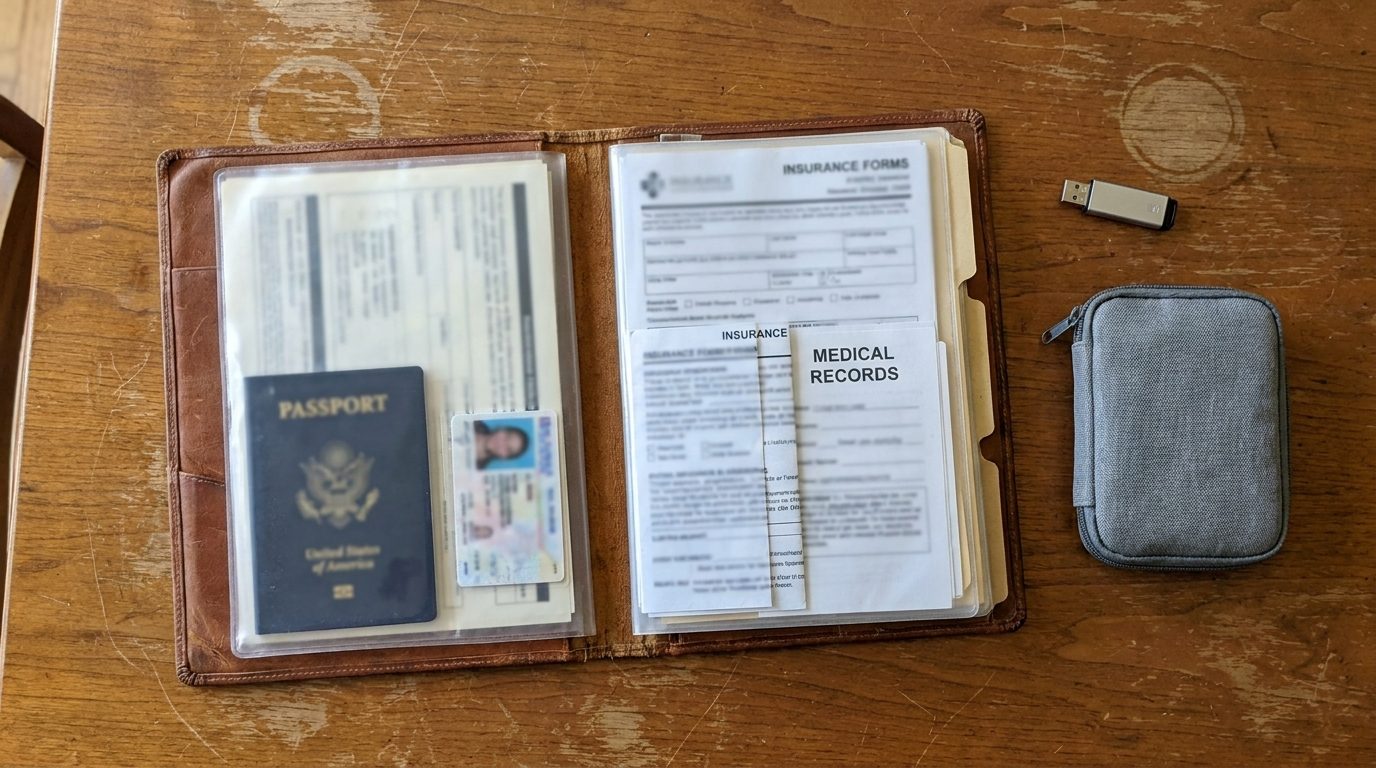
Important documents in emergencies
In an evacuation you may have minutes to leave. Having your documents organised and protected can save weeks of bureaucracy.
Minutes to leave, weeks to recover
After a fire, flood, or earthquake, one of the biggest challenges for victims is the loss of documents. Without identification, property deeds, or insurance policies, access to support, insurance payouts, and public services becomes extremely complicated. Protect your documents BEFORE an emergency.
Essential documents
Personal identification
- Cartão de Cidadão (Citizen Card): the Portuguese national ID card, essential for accessing any service
- Passport: especially if your ID card is expired
- Driving licence: required for vehicle use
- NIF (Tax Identification Number): needed for insurance and tax matters
- NISS (Social Security Number): needed for social support applications
- SNS / ADSE card: access to healthcare services
Legal and property documents
- Certificates: birth, marriage, death
- Property deeds: purchase and sale of property
- Rental agreements: proof of residence
- Insurance contracts: home, car, life, health
- Will: if applicable
- Vehicle documents: registration, insurance, MOT (IPO in Portugal)
How to protect your documents
Waterproof bag in your emergency kit
- Copies of essential documents in a double ziplock bag or purpose-made dry bag
- Keep in your emergency bag, always ready to go
- Include a list of emergency contacts (insurers, bank, family members)
- Cost: less than 5 euros for immediate protection
Fireproof safe
- For originals that stay at home (deeds, will, certificates)
- Choose a safe rated for at least 1 hour at 1000°C
- Also check water resistance rating
- Bolt the safe to the floor or wall (prevents theft)
- Cost: from around 50 euros for basic certified models
Encrypted USB drive
- Scan (using a scanner or phone app) all documents
- Store on a USB drive with encryption (BitLocker on Windows, VeraCrypt cross-platform)
- Use a strong password (at least 12 characters)
- Keep the drive in your emergency bag
- Update every 6 months or when documents change
Cloud backup
- Store digital copies in a cloud service (Google Drive, OneDrive, iCloud)
- Use extra protection (password-protected ZIP file or encrypted folder)
- Enable two-factor authentication on the account
- Accessible from any device with an internet connection
- Free plans offer 5 to 15 GB (more than enough for documents)
Home inventory
Why make an inventory?
After an incident, your insurer will ask for a detailed list of damaged or lost items. Without evidence, many claims are reduced or denied. An up-to-date inventory with photographs makes the process easier and maximises your payout.
How to do it
- Photograph or film each room (open cupboards and drawers)
- List valuable items with estimated cost
- Keep receipts for expensive equipment (appliances, electronics, jewellery)
- Include serial numbers for electronic devices
- Store copies in the cloud or on a USB drive (not just on your home computer)
When to update
- Annually: update photographs and item list
- After significant purchases: new appliances, furniture, jewellery
- After renovations: works that change the value of the property
- Moving house: complete new inventory
Health documents
For each family member
- Current medication list: name, dosage, and frequency
- Allergies: medication, food, stings, latex
- Blood type: note for each person
- Vaccination records: especially for children
- Medical history summary: chronic conditions, surgeries, relevant conditions
- Health insurance details: policy number and insurer contact
Tip: Emergency card
Create a simple card for your wallet with:
- Name and date of birth
- Blood type
- Serious allergies
- Chronic medication
- Emergency contact
Use the emergency card generator on this site to create and print yours.
Financial documents
Banking information
- IBAN for all bank accounts
- Bank contacts: customer service number, branch
- Cards: contact numbers for card cancellation in case of loss
- Loans: mortgage and other loan contracts
Insurance and property
- Insurance policies: numbers, coverage, and contacts
- Property deeds: house, land
- Rental agreement: if applicable
- See the financial preparedness guide for more details
Document checklist
The rule of 3 locations
Keep copies of your important documents in 3 different locations: 1) Originals at home (fireproof safe), 2) Copies in your emergency bag (waterproof pouch), 3) Digital copies in the cloud (encrypted). If you lose one copy, the other two ensure access.