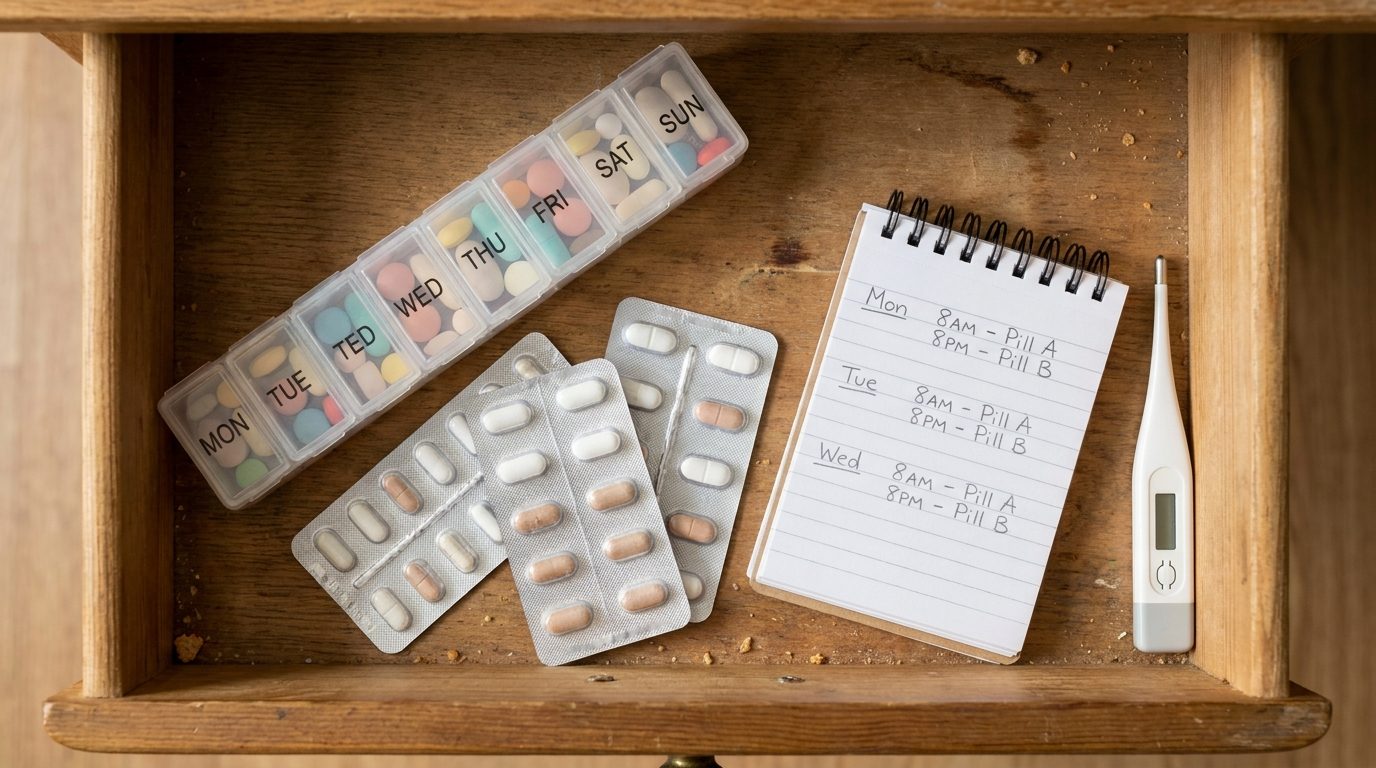
Emergency medical kit
A complete home pharmacy to handle urgent situations, common illnesses and minor medical emergencies. Being prepared can make all the difference.
This guide is for informational and educational purposes only. Always consult your doctor or pharmacist before taking any medication. Check for allergies, contraindications and drug interactions. Do not self-medicate without qualified professional guidance. In a serious emergency, call 112.
First aid kit
A good pre-assembled kit is the foundation. Then supplement it with specific medications and materials.
Basic first aid kit
Compact kit with plasters, gauze, bandages, scissors, tweezers and gloves. Ideal for the car or a backpack. Available at Decathlon, Leroy Merlin or pharmacies.
Complete pharmacy kit
A more robust kit with a larger quantity of supplies: assorted plasters, sterile gauze pads, adhesive tape, thermometer, emergency blanket, masks, gloves and antiseptic. For home or car.
Waterproof storage box
A sturdy organiser box that is water-resistant and dustproof, with compartments. Protects medications from moisture, light and temperature. Essential for keeping everything organised and in good condition.
Wound dressing and treatment supplies
Essential materials for treating cuts, wounds, burns and minor injuries.
| Material | Recommended quantity | Use | Approx. price |
|---|---|---|---|
| Assorted adhesive plasters | Box of 100 (various sizes) | Small cuts, scrapes, blisters | EUR 3-5 |
| Large adhesive dressings (Mepore / Cosmopor) | 10-15 units (10x10 cm and 10x15 cm) | Larger wounds, post-operative dressings, absorbent pads | EUR 8-12 |
| Sterile gauze pads 10x10 cm | 2-3 packs of 20 units | Cleaning and covering wounds, absorbing blood | EUR 2-3/pack |
| Elastic bandages | 3-4 rolls (6 cm, 8 cm, 10 cm widths) | Securing dressings, supporting sprains, light immobilisation | EUR 2-3/roll |
| Medical adhesive tape (Micropore/Leukosilk) | 2-3 rolls (2.5 cm width) | Securing dressings and gauze pads, suitable for sensitive skin | EUR 3-4/roll |
| Adhesive sutures (steri-strips) | 1-2 packs | Closing wound edges, alternative to stitches for superficial cuts | EUR 5-8 |
| Blunt-tip scissors | 1 unit | Cutting dressings, bandages and clothing (safe, non-piercing) | EUR 3-6 |
| Fine-point tweezers | 1 unit | Removing splinters, thorns, ticks, foreign bodies | EUR 2-4 |
| Safety pins | 6-10 units | Securing bandages and triangular slings | EUR 1-2 |
| Disposable nitrile gloves | 10-20 pairs (sizes M/L) | Protection when treating wounds, preventing cross-infection | EUR 5-8/box of 100 |
| Tourniquet (CAT / SOFT-T) | 1 unit | Controlling severe limb haemorrhage (ONLY in extreme emergencies) | EUR 8-15 |
| Triangular bandage | 2 units | Arm sling, containment, protecting large wounds | EUR 2-3 |
Antiseptics and disinfectants
Essential products for cleaning and disinfecting wounds, preventing infections.
| Product | Presentation | Use | Approx. price |
|---|---|---|---|
| Povidone-iodine 10% (Betadine) | 100 ml or 125 ml bottle | Disinfecting wounds, cuts and burns. Apply with a clean gauze pad. Do not use if allergic to iodine. | EUR 5-7 |
| 70% ethyl alcohol | 250 ml or 500 ml bottle | Disinfecting intact skin, instruments and surfaces. Do NOT apply to open wounds (stings and damages tissue). | EUR 2-3 |
| Hydrogen peroxide (10 vol.) | 250 ml bottle | Initial cleaning of dirty wounds, mild disinfection. Effervescent action helps remove debris. | EUR 1-2 |
| Sterile saline solution 0.9% | Individual 5 ml or 10 ml doses (pack of 20-30) | Cleaning wounds, eyes, mucous membranes. Irrigation before disinfecting. Essential and safe. | EUR 3-5 |
| Individual antiseptic wipes | Pack of 10-20 | Quick disinfection when water is unavailable. Ideal for backpack or car. | EUR 3-4 |
| Chlorhexidine 0.5% (Betadine alternative) | 100 ml bottle | Antiseptic for people allergic to iodine. Disinfecting wounds and skin. | EUR 4-6 |
- Wash your hands and put on gloves
- Rinse the wound with saline solution (or clean running water)
- Dry with sterile gauze
- Apply povidone-iodine or chlorhexidine
- Cover with a sterile dressing or gauze pad
Medications: pain and fever
Analgesics and antipyretics for managing mild to moderate pain and fever.
| Medication | Adult dosage | What it is for | Approx. price |
|---|---|---|---|
| Paracetamol (acetaminophen) 500 mg and 1000 mg | 1000 mg every 8 h (max. 3000 mg/day) Take with water, with or without food |
Mild to moderate pain (headache, toothache, muscle pain). Fever. No anti-inflammatory effect. Gentle on the stomach. | EUR 2-3 (20 tabs) |
| Ibuprofen 400 mg or 600 mg | 400 mg every 8 h (max. 1200 mg/day) ALWAYS take with food |
Pain, inflammation, fever. Useful for menstrual pain, sprains, injuries, toothache. May irritate the stomach. | EUR 3-5 (20 tabs) |
| Children's paracetamol syrup 160 mg/5 ml | Dose by weight (children) 10-15 mg/kg every 6-8 h |
Fever and pain in children. Calculate dose according to weight. Comes with a dosing syringe. Consult a paediatrician. | EUR 3-4 |
| Children's ibuprofen (100 mg/5 ml) | Dose by weight (children >6 months) 5-10 mg/kg every 6-8 h |
Alternative to children's paracetamol. High fever, inflammation, pain. Give with food or milk. | EUR 4-5 |
Medications: digestive system
For treating common gastrointestinal problems: diarrhoea, nausea, heartburn, cramps and dehydration.
| Medication | Adult dosage | What it is for | Approx. price |
|---|---|---|---|
| Loperamide 2 mg (Imodium) | 2 capsules initially, then 1 after each loose stool (max. 8 caps/day) | Acute diarrhoea. Reduces intestinal motility. Do NOT use if there is high fever or blood in the stool (may indicate infection). | EUR 5-7 (10-20 caps) |
| Hyoscine butylbromide 10 mg (Buscopan) | 1-2 tablets, 3-4 times a day (max. 6 tabs/day) | Abdominal cramps, intestinal spasms, "gripping" stomach pain. Relieves muscle spasms. | EUR 5-6 (20 tabs) |
| Antacids (Gaviscon / Maalox) | 2 tablets or 10 ml suspension after meals and at bedtime | Heartburn, reflux, stomach burning. Neutralises gastric acid. Fast symptom relief. | EUR 6-8 |
| Domperidone 10 mg (Motilium) | 1 tablet 3 times a day, 15-30 min before meals | Nausea, vomiting, bloating. Speeds up gastric emptying. Useful in gastroenteritis. | EUR 4-5 (30 tabs) |
| Oral rehydration salts (ORS / Dioralyte) | 1 sachet dissolved in 200 ml water, drink after each loose stool or bout of vomiting | ESSENTIAL: Rehydration during diarrhoea, vomiting, dehydration. Replaces water, salts and glucose. Can save lives (especially in children and the elderly). | EUR 4-6 (6-10 sachets) |
| Activated charcoal 250 mg | 4-8 capsules (1-2 g) immediately after suspected ingestion | Mild food poisoning, toxins. Absorbs substances in the stomach. Do NOT use in cases of corrosives or petroleum products. | EUR 3-5 |
| Omeprazole 20 mg (gastric protector) | 1 capsule at breakfast (on an empty stomach) | Gastric protection when using anti-inflammatory drugs long-term. Reduces acid production. Use beyond 14 days: consult a doctor. | EUR 3-5 (14 caps) |
Medications: allergies and respiratory system
Antihistamines for allergies and medications for respiratory problems.
| Medication | Adult dosage | What it is for | Approx. price |
|---|---|---|---|
| Cetirizine 10 mg | 1 tablet at bedtime (take at night) | Allergies (pollen, dust mites, pet hair), allergic rhinitis, urticaria, itching. May cause mild drowsiness. | EUR 3-4 (20 tabs) |
| Loratadine 10 mg | 1 tablet per day (morning or evening) | Alternative to cetirizine. Allergies, sneezing, blocked nose, itching. Less drowsiness. Good for daytime use. | EUR 3-4 (20 tabs) |
| Dimetindene gel (Fenistil) | Apply a thin layer 2-4 times a day to the affected area | Insect bites, jellyfish stings, nettle rash. Itching, skin irritation, mild skin allergies. Fast relief. | EUR 6-8 (30 g tube) |
| Adrenaline auto-injector (EpiPen / Anapen) | 0.3 mg IM in emergency (inject into the thigh) | PRESCRIPTION ONLY: For people with severe allergies (anaphylaxis) to food, stings, medications. Life-saving device. Call 112 immediately after use. | EUR 50-90 (prescription) |
| Salbutamol inhaler (Ventolin) | 1-2 puffs when needed (4-6 h interval) | PRESCRIPTION ONLY: For asthmatics. Bronchodilator for asthma attacks, breathlessness, wheezing. Essential to keep at hand if you have asthma. | EUR 5-8 (prescription) |
| Saline nasal spray (Rhinomer / Sterimar) | 2-3 sprays in each nostril, several times a day | Nasal cleaning, blocked nose, colds, allergies. Moisturises mucous membranes. Safe for children and pregnant women. | EUR 5-7 |
Medications: skin and eye care
Products for treating skin problems, burns, infections and eye irritation.
| Product | Application | What it is for | Approx. price |
|---|---|---|---|
| Antifungal cream (clotrimazole 1% / Canesten) | Apply 2-3 times a day for 2-4 weeks | Skin fungal infections, athlete's foot, fungal infections in moist areas (groin, armpits). Continue treatment for 1 week after symptoms disappear. | EUR 5-7 |
| Burn cream (Biafine / trolamine) | Apply a thick layer 2-4 times a day | Sunburn, mild thermal burns (1st and superficial 2nd degree). Moisturises and speeds healing. Do not use on severe burns. | EUR 6-8 |
| Silver sulfadiazine cream (Silvederma / Flammazine) | Apply a thin layer 1-2 times a day on burns | 2nd degree burns, preventing infection in burns. Topical antibacterial. Some presentations require a prescription. | EUR 8-12 |
| Moisturising eye drops (Systane / Hyabak / Lacryvisc) | 1-2 drops in each eye, 3-4 times a day | Dry eyes, eye irritation, wind, air conditioning, screens. Lubricates and relieves discomfort. Preservative-free is preferable. | EUR 8-12 |
| Sunscreen SPF 50+ | Apply generously 15-30 min before sun exposure. Reapply every 2 h. | Prevents sunburn, skin cancer, photoageing. Essential for outdoor activities, beach, mountains. | EUR 8-15 |
| Insect repellent (Autan / Off / Relec) | Apply to exposed skin. Avoid eyes and mouth. Reapply as directed (4-8 h). | Protection against mosquitoes, ticks, flies. DEET 30-50% is most effective. Essential in rural areas, camping, tick season (spring/summer). | EUR 5-8 |
| Petroleum jelly (Vaseline) | Apply as needed | Lip protection, blister prevention (feet), lubrication, protecting skin in friction zones. Multi-purpose and inexpensive. | EUR 2-3 |
| Hydrocortisone 1% cream | Apply a thin layer 1-2 times a day (max. 7 days) | Mild skin inflammation, eczema, highly inflamed bites, contact dermatitis. Mild corticosteroid. Do not use on infected wounds. | EUR 4-6 |
- Cool immediately under cold running water (for at least 20 minutes)
- Do not apply ice, butter, toothpaste or other "home remedies"
- Cover with a clean, damp dressing
- Apply Biafine or a specific burn cream after cooling
- If there are large blisters, severe pain or a large area: see a doctor
Special medical equipment
Devices and equipment useful for monitoring and advanced first aid.
Digital thermometer
Axillary or tympanic (ear) thermometer. Fast and accurate body temperature reading. Essential for detecting fever. Choose models with a flexible tip (more comfortable).
Wrist/arm blood pressure monitor
For measuring blood pressure. Important if someone in the household has hypertension or heart problems. Automatic arm monitors are more accurate than wrist models. Brands: Omron, Beurer.
Pulse oximeter
Measures blood oxygen saturation (SpO2) and heart rate. Useful for respiratory problems, asthma, COPD, COVID-19. Normal values: SpO2 >95%. If <92%, seek medical help.
Immobilisation splints (SAM Splint)
Mouldable aluminium-covered splints or inflatable splints. For immobilising fractures or severe sprains until medical help arrives. Lightweight, reusable and easy to store.
Emergency blanket
Gold/silver heat-reflective foil blanket. Compact and lightweight. Essential for preventing hypothermia, treating shock or retaining body heat. Keep 2-3 (home, car, backpack).
Pocket CPR mask
Protective mask for mouth-to-mouth ventilation with a one-way valve. Prevents direct contact and infections during cardiopulmonary resuscitation. Ideal for those with first aid training.
Disposable syringes (without needle)
10 ml or 20 ml syringes (without needle) for irrigating wounds with saline solution or water. Deep and effective cleaning. Pack of 5-10 units.
Manual sphygmomanometer (professional)
Manual blood pressure device (cuff + stethoscope). More accurate than automatic monitors, but requires practice. Good for those with training or who want to learn.
How to organise your medical kit
A well-organised kit can make the difference in an emergency. Follow these guidelines:
Container and storage
- Waterproof box: Use a plastic box with a hermetic seal, resistant to water and dust. Protects medications from moisture and temperature.
- Transparent or translucent: Makes it easy to see the contents without opening.
- With compartments: Dividers or interior pouches help organise by category.
- Carry handle: Useful for evacuations or moving to another room.
Categorisation and labelling
- Organise by type: Separate medications, wound dressings, antiseptics, equipment.
- Clear labels: Medication name, dosage, what it is for and expiry date.
- Colour coding: Use different coloured zip-lock bags for each category (red = pain/fever, blue = digestive, green = allergies, etc.).
- Inventory list: Stick a complete contents list with expiry dates to the inside of the lid.
Location and storage
- Cool, dry place: A cupboard away from heat sources, moisture and direct sunlight.
- Easy access: All adults in the household should know where the kit is.
- Out of children's reach: High shelf or cupboard with a child lock.
- Temperature: Most medications: 15-25 C. Some need refrigeration (check the leaflet).
Regular maintenance
- Check expiry dates every 6 months: Set a reminder (January and July).
- Replace what you use: Whenever you use something, note it down and restock on your next pharmacy visit.
- Update the inventory: Keep the contents list current.
- Stock rotation: Use the oldest medications first (even if still within their use-by date).
- Check expiry dates on all medications
- Confirm packaging integrity (no tears, no moisture)
- Test thermometer and battery-powered devices
- Restock used supplies (plasters, gauze, gloves)
- Update the inventory list
- Check whether any newly prescribed medications need to be added
- Car: Basic kit with plasters, povidone-iodine, paracetamol, gloves, emergency blanket
- Hiking backpack: Plasters, gauze, adhesive tape, individual povidone-iodine, paracetamol, antihistamine
- Travel: Compact version of the main kit with regular medications + anti-diarrhoeal
Where to buy
Pharmacies and parapharmacies
For medications, medical supplies and professional advice:
- Local pharmacies: Best option for personalised advice and prescription medications.
- Wells: Parapharmacy chain with a wide range of health and wellness products at competitive prices.
- Supermarket pharmacies (Continente / Pingo Doce): In-store parapharmacy, affordable prices for over-the-counter products.
- Online pharmacies (e.g. Farma Conde, DoceVita): Home delivery, useful for large orders.
First aid supplies
For kits, boxes, wound dressings and equipment:
- Decathlon: First aid kits, sports supplies, emergency blankets, backpacks.
- Leroy Merlin: Kits, organiser boxes, protective equipment.
- Amazon.es / .pt: Huge selection, price comparison, fast delivery. Good for tourniquets, SAM splints, pulse oximeters.
- IKEA: Inexpensive and functional organiser boxes for storing the kit.
- Orthopaedic suppliers: Professional-grade equipment, splints, crutches, specialist gear.
Price comparison
- KuantoKusta: Compares prices for medications and health products across different online shops.
- Pharmacy apps: Many pharmacies have apps with discount and loyalty programmes.
- Generics: Whenever possible, choose generic medications (same active ingredient, much cheaper).
First aid training
Having the kit is essential, but knowing how to use it is even more important:
- Cruz Vermelha Portuguesa (Portuguese Red Cross): Basic and advanced first aid courses (in person).
- ANEPC (National Authority for Emergency and Civil Protection): Free or low-cost training sessions in many municipalities.
- INEM (National Institute for Medical Emergency): Educational materials and campaigns on BLS (basic life support).
- YouTube / online platforms: First aid tutorials, CPR, haemorrhage control (complement, not substitute for in-person training).
Final checklist: what you should have
Minimum essential kit (approx. EUR 80-100)
- Waterproof organiser box
- Basic first aid kit (plasters, gauze, bandages, scissors, tweezers, gloves)
- Povidone-iodine 10% (100 ml)
- Saline solution (individual doses)
- Paracetamol 1 g (20 tablets)
- Ibuprofen 400 mg (20 tablets)
- Oral rehydration salts, Dioralyte (6-10 sachets)
- Loperamide (Imodium)
- Gaviscon or Maalox
- Cetirizine or loratadine (antihistamine)
- Dimetindene gel (Fenistil)
- Digital thermometer
- Emergency blankets (2-3 units)
- Insect repellent
- Sunscreen SPF 50
Recommended complete kit (+EUR 50-80)
Add to the essential kit:
- Hyoscine butylbromide (Buscopan, for cramps)
- Domperidone (for nausea)
- Activated charcoal
- Children's paracetamol (if you have children)
- Clotrimazole (Canesten, antifungal)
- Trolamine cream (Biafine, for burns)
- Moisturising eye drops
- Petroleum jelly
- Tourniquet
- Adhesive sutures (steri-strips)
- Pulse oximeter
- Blood pressure monitor (if applicable)
- Pocket CPR mask
Personal medications (always include)
- Chronic medication for all household members (minimum 1-2 week reserve)
- EpiPen if there are severe allergies
- Inhaler (Ventolin) if there are asthmatics
- Insulin and diabetes supplies (if applicable)
- Emergency cardiac medication (if prescribed)
- Copies of important prescriptions
- List of allergies and medical conditions for each person
Final reminder: safety and responsibility
Having a complete medical kit is an essential step in emergency preparedness, but:
- This guide does NOT replace a medical consultation or professional diagnosis
- If in doubt, always contact SNS 24 (808 24 24 24) or call 112 in emergencies
- Do not use medications past their expiry date
- Always read the package leaflet before taking any medication
- Respect dosages and intervals between doses
- Keep medications away from children and animals
- First aid training is JUST AS important as having the supplies
- Update the kit regularly and keep everything organised
Being prepared saves lives. Take care of yourself and your family.