Safety and protection
Protect yourself from invisible dangers and minimise risks during emergencies.
Carbon monoxide
INVISIBLE DANGER: carbon monoxide (CO)
Generators, braziers, camping stoves and fireplaces produce carbon monoxide, an odourless, colourless and DEADLY gas.
- Symptoms: headache, dizziness, nausea, confusion, loss of consciousness
- NEVER use generators, barbecues or camping stoves INSIDE a house or garage
- Always use them outdoors, at least 6 metres from doors and windows
- Install a CO detector on every floor of your home
- If the detector goes off: leave IMMEDIATELY, ventilate the house, call 112
Carbon monoxide detector
Essential if you have a fireplace, water heater, boiler or use a generator. Battery lasts 7-10 years. Install at 1.5 m height in a hallway or living room. Test monthly.
Electrical safety
Electricity: hazards and prevention
- NEVER touch fallen power lines. Assume they are ALWAYS live
- Switch off the mains if the house floods or sustains structural damage
- NEVER connect a generator directly to the electrical panel without a transfer switch
- Use extension leads rated for the wattage (minimum 1.5 mm2 for 2000 W, 2.5 mm2 for 3500 W)
- Inspect cables and plugs before use. Replace if damaged
- Use surge protectors for sensitive equipment (computers, TV, router)
- If you see sparks or smell burning: switch off the mains and call an electrician
Transfer switch for generators
What it is: A device that prevents the generator from feeding electricity back into the public grid (which can kill EDP utility workers) and allows safe switching between mains and generator.
Cost: 150-300 EUR (equipment + installation by a certified electrician)
Mandatory: Yes, by law and for safety. Using a generator without a transfer switch is ILLEGAL and DANGEROUS.
Home protection
Shutters and blinds
Close and lock ALL shutters before a storm. If you do not have shutters, reinforce windows with tape in an X pattern (this does not prevent breakage but reduces flying glass). Consider installing aluminium shutters in exposed areas (200-500 EUR per window).
Gutters and downpipes
Clean twice a year (autumn and spring). Blocked gutters cause water ingress and damage to walls and foundations. Cleaning cost: 50-150 EUR. Install leaf guards: 5-10 EUR per metre.
Roof
Annual inspection by a professional (80-150 EUR). Replace broken or loose tiles. Check flashings and gullies. Minor repair: 150-400 EUR. Ignoring problems can lead to thousands of euros in damage.
Trees
Prune tall trees near the house. Branches over the roof are a storm hazard. Remove dead or diseased trees. Pruning cost: 150-500 EUR (depending on size). Removal cost: 500-2,000+ EUR.
Surge protectors
Protect against voltage spikes (lightning, grid restoration). Essential for: computers, TV, games console, router, expensive appliances. Cost: 15-50 EUR. Replace after a nearby lightning strike.
Home insurance
Check your cover: storms, flooding, lightning, falling trees. Many policies EXCLUDE flooding. Add it if you are in a risk zone. Update the insured value (rebuilding costs have risen significantly). Photograph your home and belongings (proof for claims).
House fire
Fire prevention and response
During emergencies, fire risks increase: candles, camping stoves, electrical overload, generators.
- ABC dry powder extinguisher 2 kg (15-25 EUR): keep one in the kitchen and near the generator
- Fire blanket (10-15 EUR): for hob or deep-fryer fires. More effective than water
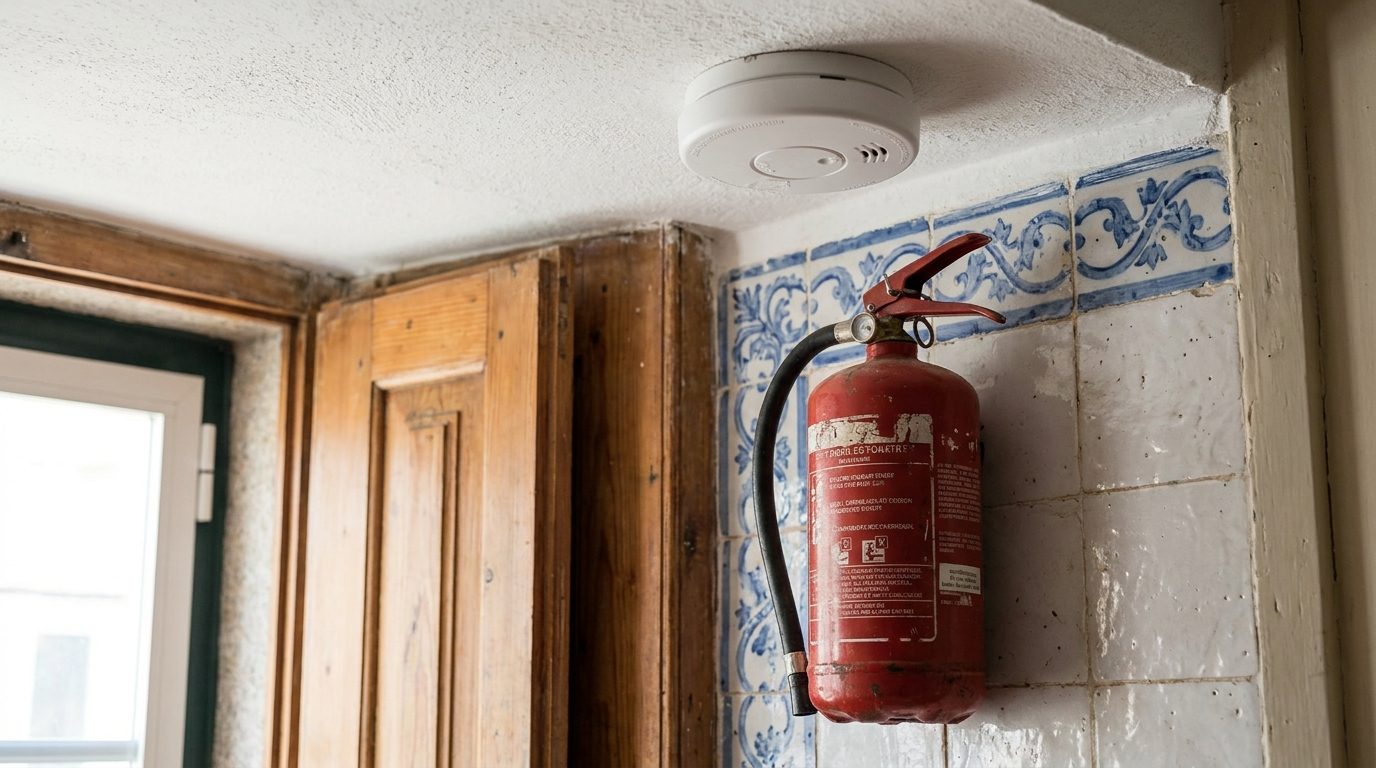
- Smoke detector (8-15 EUR each): install on every floor. Test monthly
- Evacuation plan: 2 exits per room, an outdoor meeting point, practise with the family
- NEVER throw water on an oil fire. Use a blanket or extinguisher
- If clothing catches fire: STOP, DROP, ROLL (do not run)
Flooding
Flood protection
- Sandbags: temporary barrier for doors and windows (2-5 EUR each, or make your own with soil and heavy-duty bin bags)
- Submersible pump: 50-200 EUR, essential for basements. Have an extension lead and hose ready
- Elevate valuables: place on high shelves or upper floors BEFORE the storm
- Cut the electricity if water rises, risk of electrocution
- NEVER walk through water deeper than 15 cm. The current can knock an adult off their feet
- Floodwater is CONTAMINATED (sewage, chemicals). Wear tall boots and gloves
- Afterwards: dry EVERYTHING within 24-48 hours (to prevent mould). Use dehumidifiers and fans
Document kit
Essential documents in an emergency
Keep copies on paper (waterproof pouch) and digital (cloud: Google Drive, Dropbox):
- National ID cards (Cartao de Cidadao) for the whole family
- Driving licences
- Insurance policies (home, health, car)
- Property deed / rental contract
- Medical records, prescriptions, medication list
- Emergency contacts (family, doctors, insurer, bank)
- NIB/IBAN and banking details
- Birth and marriage certificates
- Important passwords and codes (safe, alarm)
Waterproof pouch: 10-30 EUR (Decathlon). Consider an encrypted USB drive for digital documents.
Emergency communication
Staying in touch when everything fails
- FM radio: Antena 1: 95.7 FM Lisbon, 96.7 Porto, 94.9 Coimbra, 97.6 Faro (official information)
- Whistle: 3 short blasts = universal SOS. Essential if trapped in debris
- Text messages instead of calls: They use less network capacity. If you cannot call, send a text
- Family meeting point: Agree on one BEFORE the emergency. For example, "the municipal park" or a relative's house
- PMR446 channel 1: Walkie-talkie radios (20-80 EUR per pair), frequency 446.00625 MHz, range 2-10 km
- CB channel 9: Citizens Band radio (40-150 EUR), frequency 27.065 MHz, international emergency channel
- Power bank: Keep your phone charged. Aeroplane mode saves battery
Dams in Portugal
Safety in areas downstream of dams
Portugal has large dams (Alqueva, Castelo de Bode, Alto Lindoso, Cabril) and hundreds of smaller ones. If you live downstream of a dam, know the risks and the emergency plan.
- Intermittent siren: ALERT signal. Prepare to evacuate, follow official information
- Continuous siren: IMMEDIATE DANGER signal. Evacuate IMMEDIATELY to high ground
- Self-rescue zone (zona de auto-salvamento): the area downstream where the flood wave arrives before emergency services can (the first few kilometres). If you live in this zone, you MUST know the evacuation route
- Dam emergency plans are available at the Municipal Council (Camara Municipal)
- If you hear a dam siren: do NOT wait for confirmation. EVACUATE
What to know
- Find out if you live in the flood zone of a dam
- Know the evacuation route to high ground
- Know where the warning sirens are
- Take part in emergency drills (mandatory for dam operators)
- Consult the dam's Internal Emergency Plan (PEI) at the Municipal Council
Major dams
- Alqueva: largest artificial lake in Western Europe, Alentejo region
- Castelo de Bode: supplies Lisbon, on the river Zezere
- Alto Lindoso: river Lima, Alto Minho region
- Cabril: river Zezere, the tallest dam in Portugal
- Aguieira: river Mondego, protects Coimbra
- Full list: cnpgb.apambiente.pt
Personal safety after a disaster
Beware of scams and opportunists
After storms, scammers appear offering "urgent repairs" or "government grants".
- ALWAYS verify the identity of anyone who knocks on your door (ask for a professional ID, call their company)
- NEVER pay upfront for repairs
- Get 3 quotes before hiring any service
- Be suspicious of "urgent" pricing. Scammers create pressure
- Avoid oversharing on social media about an empty or damaged home (a target for burglars)
- Government support: only through official websites (.gov.pt) or your local Parish Council / Municipal Council
- Insurance company: only contact through the official number (do not trust unsolicited texts or emails)