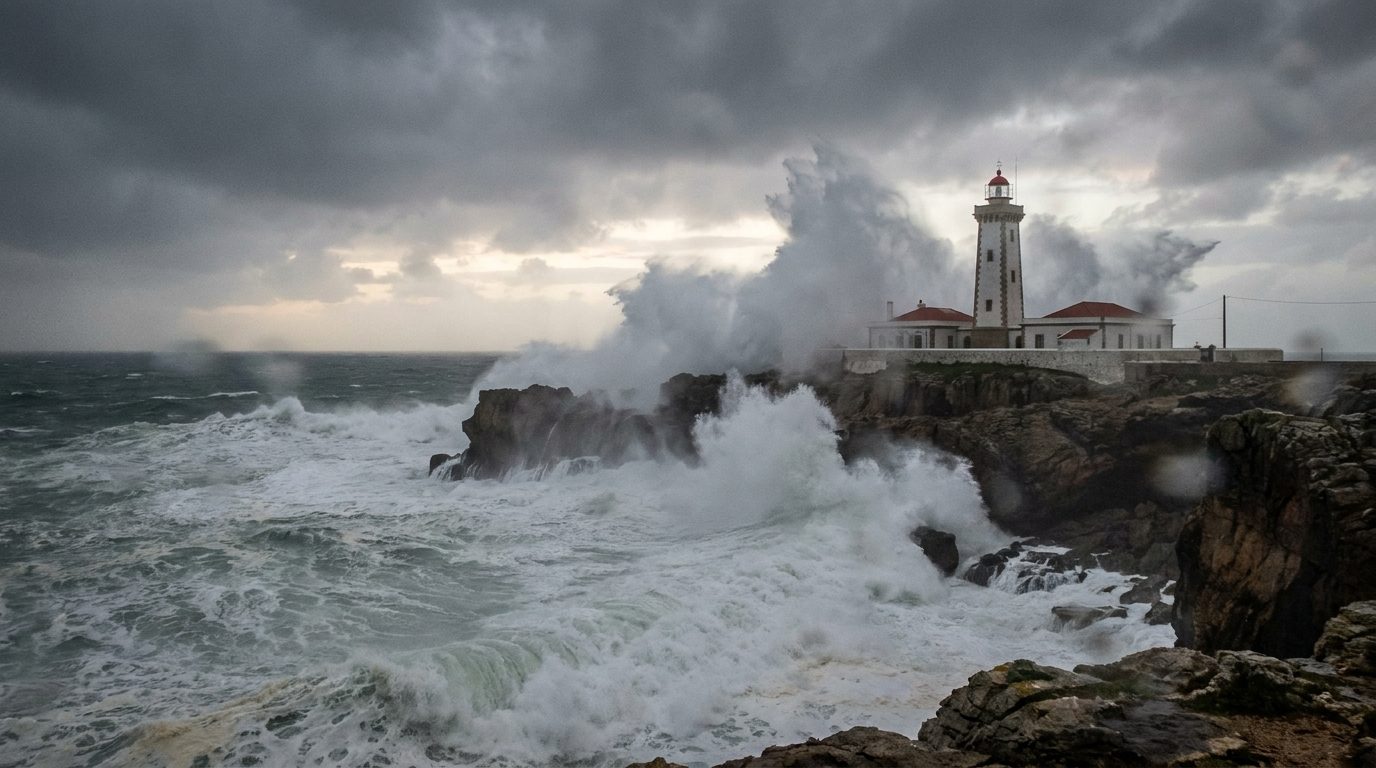
Severe storms in Portugal
Portugal faces severe Atlantic storms every year, bringing strong winds, heavy rain, and flood risk. Being prepared can save lives.
Atlantic storms are a real threat
Between October and March, Portugal is regularly hit by Atlantic depressions that bring destructive winds and extreme rainfall. In recent years, storms like Leslie, Elsa, and Nelson caused deaths, power cuts, and millions of euros in damage. Preparation is your best defence.
Types of storms in Portugal
Atlantic depressions
The most common type in Portugal. They form in the North Atlantic and hit the mainland between October and March, bringing:
- Heavy, prolonged rain (can exceed 100 mm in 24 hours)
- Strong to very strong winds (gusts above 100 km/h along the coast)
- Rough seas with waves of 6 to 12 metres
- High risk of flooding and landslides
Extratropical cyclones
Particularly intense depressions that can bring hurricane-force winds to the mainland:
- Gusts exceeding 150 km/h in extreme cases
- Can cause storm surges along the coast
- Typical duration of 12 to 36 hours
- Significant structural damage to buildings and infrastructure
Severe thunderstorms
More frequent in spring and summer, especially in the interior:
- Lightning (Portugal records thousands of strikes each year)
- Hail, sometimes with large stones
- Torrential rain over short periods (flash floods)
- Sudden strong winds (microbursts)
Tornadoes
Yes, they do occur in Portugal. They are relatively rare but can be destructive:
- Most affected areas: Alentejo, Ribatejo, and the coast
- Typically F0 to F2 on the Fujita scale
- Often associated with severe instability lines
- In 2022, an F2 tornado caused significant damage in Palmela
Simplified wind scale
Strong (>75 km/h)
- Branches snap
- Difficult to walk against the wind
- Loose objects fly around
- Driving becomes difficult
Action: bring outdoor objects inside, avoid unnecessary travel.
Very strong (>100 km/h)
- Trees uprooted
- Tiles and aerials ripped off
- Damage to light structures
- Driving is dangerous
Action: stay indoors, move away from windows, do not drive.
Violent (>120 km/h)
- Widespread destruction
- Roofs torn off
- Facades damaged
- Extremely dangerous
Action: go to an interior room on the ground floor. Do not leave the building under any circumstances.
BEFORE: Storm preparation
Protect your home and surroundings
- Outdoor objects: bring in or secure garden furniture, plant pots, trampolines, awnings
- Trees: prune branches near the house and power lines
- Gutters and drains: clean regularly to prevent blockages
- Tiles and windows: check condition, repair cracks or loose pieces
- Park your car: away from trees, poles, and high walls
Personal preparation
- Charge devices: phones, power banks, rechargeable torches
- Fill water containers: water supply may be cut
- Check IPMA alerts: see weather alerts
- Prepare your emergency bag: see guide
- Inform your family: agree on a plan for evacuation or communication failure scenarios
- Medication: ensure a supply for several days
DURING: What to do in a storm
Safety first
- Stay indoors, away from windows and glass doors
- If winds are very strong: go to an interior room on the ground floor
- Do NOT use lifts: risk of power cuts
- Thunderstorms: do not use a landline phone or take a bath (pipes conduct electricity)
If you are driving
- Reduce speed and increase following distance
- Avoid flooded areas: 15 cm of water is enough to lose control (see floods guide)
- If visibility is zero: pull over in a safe spot and turn on hazard lights
- Watch for branches and debris on the road
- Do not cross exposed bridges in high winds
If you are outdoors
- Seek solid shelter (a building, not a temporary structure)
- Avoid trees, especially eucalyptus and pine (shallow roots)
- Avoid metal structures and fencing
- Avoid hilltops and exposed areas
- Lightning: if caught in the open, crouch into the lowest position possible without lying on the ground. Avoid water, isolated trees, and metal objects
AFTER: Post-storm safety
Post-storm hazards
- Fallen power lines: keep at least 10 metres away. NEVER touch them
- Check the structure of your home before entering (loose tiles, cracks, jammed doors)
- Partially fallen trees: they can collapse at any moment, keep your distance
- Flooding: water may continue to rise for hours after the rain stops
Recovery
- Document the damage: photograph everything for your insurance claim
- Clear debris carefully: wear gloves and boots, watch for nails and glass
- Check on neighbours: especially the elderly and people with reduced mobility
- Report damage: contact your local council and civil protection
- Insurance: report to your insurer within the deadline (usually 8 days in Portugal)
Recent storm history in Portugal
Storm Leslie (2018)
- Post-tropical cyclone that struck Figueira da Foz in October
- Gusts exceeding 170 km/h
- Over 300,000 people left without electricity
- Hundreds of trees uprooted and roofs damaged
Storm Elsa (2019)
- Depression Elsa hit Portugal in December
- 1 death and dozens displaced
- Severe flooding in Lisbon and the south
- Strong winds with gusts above 120 km/h
Depression Nelson (2024)
- Heavy rain in March-April in the north and centre
- Severe flooding in Porto and Braga
- Landslides in mountainous areas
- Hundreds of incidents in just a few hours
Useful contacts
Emergency contacts
- 112: European emergency number
- Civil Protection (ANEPC): 800 246 246
- IPMA: ipma.pt (weather alerts)
- E-REDES (electricity): 800 506 506
- Antena 1: 95.7 FM (Lisbon), official information source
- All emergency contacts