Battery runtime calculator
1. Battery capacity
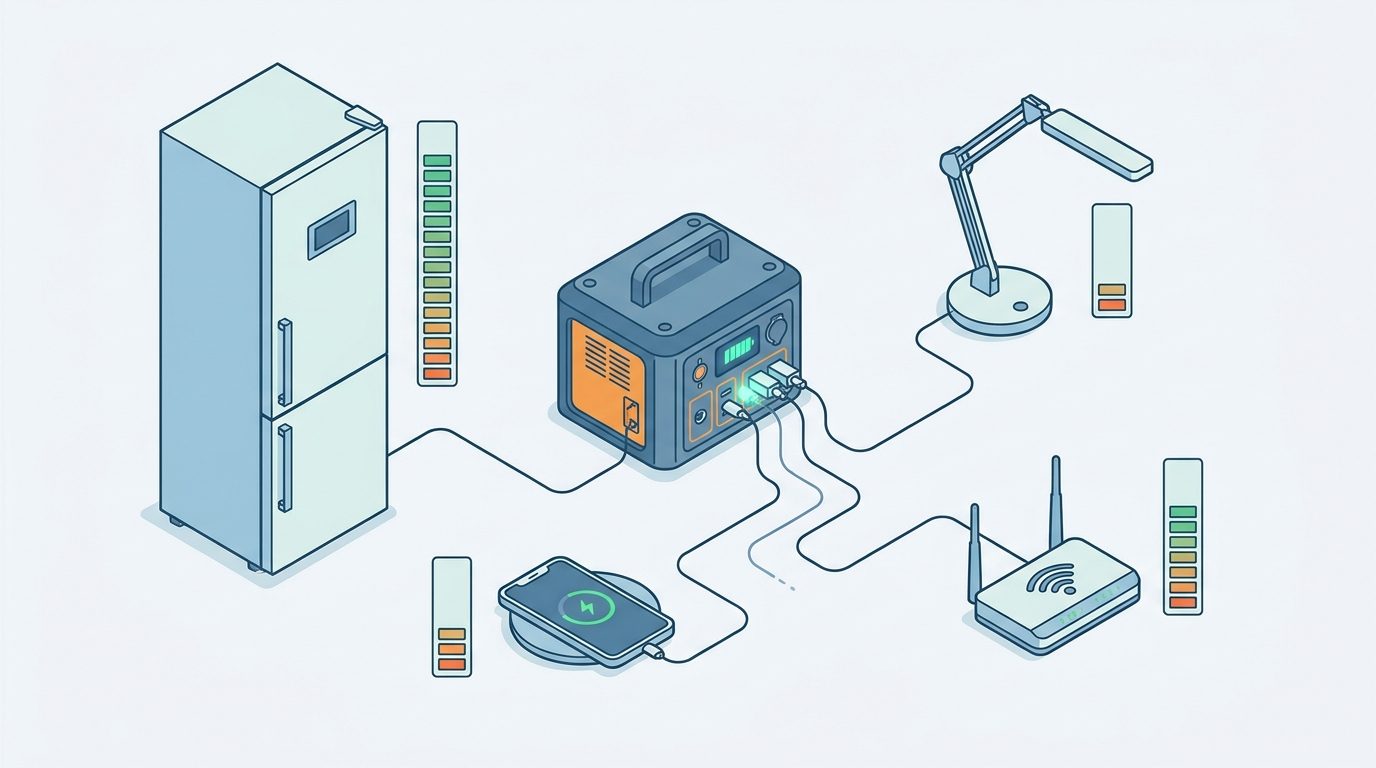
2. Select the devices you will power
How to maximize runtime
Prioritize essential devices
During a prolonged power cut, only run what you really need. Fridge, basic lighting and phone charging are priorities. TV, laptop and other comforts can wait.
Alternate heavy devices
Don't run everything at once. For example, run the fridge for 2 hours, turn it off, and use the energy for other things. The fridge maintains temperature for some time when off.
Use LED lighting
LED bulbs consume 5 to 10 times less than traditional bulbs. A camping LED lantern with rechargeable batteries saves battery for more important devices.
Charge devices during the day
If you have a solar panel, charge the power station during the day and use the energy at night. A 100-200W panel can restore 400 to 800 Wh in a sunny day, extending runtime indefinitely.
Practical tips for emergencies
Inverter efficiency
All power stations lose about 15% of energy in the DC to AC conversion (direct current to alternating current). The calculation on this page already includes this loss. The actual usable capacity is always lower than the nominal capacity.
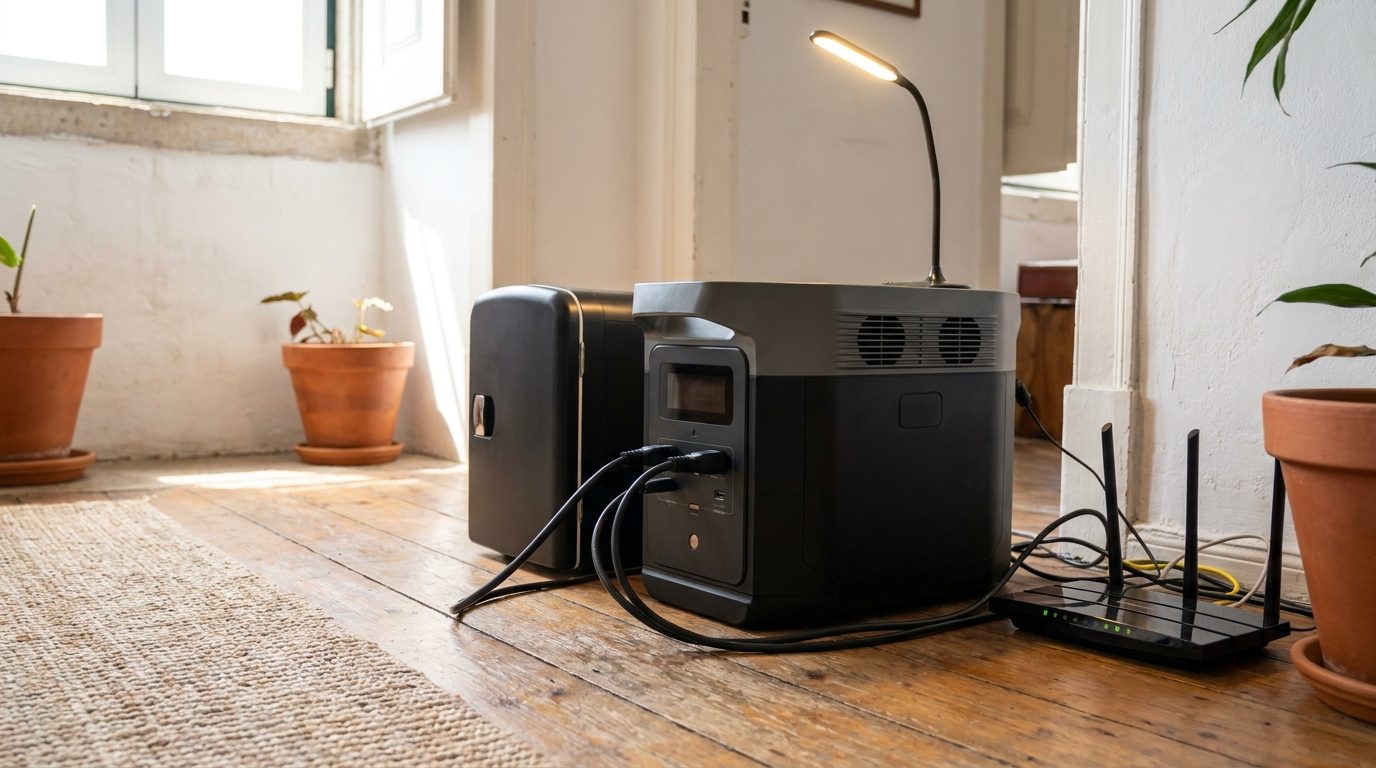
Typical runtime scenarios (EcoFlow Delta 2, 1024 Wh)
- Fridge alone (150W): about 5.8 hours continuous. In practice it lasts longer, because the compressor cycles on and off (30-40% duty cycle).
- Lighting + phone + radio (70W): about 12.4 hours. Sufficient for an entire night.
- Laptop + router + lights (130W): about 6.7 hours. A remote working day.
- Minimum kit: lights + phone + radio (70W): about 12.4 hours. Comfortable survival mode.
Devices you should not run on a small power station
- Electric heater (2000W): drains a 1000 Wh battery in under 30 minutes. Use a butane gas heater.
- Microwave (1000W): consumes a lot, but can be used for short periods (5 minutes = ~85 Wh).
- Coffee machine (800W): one coffee uses little time, but check if the power station supports the peak power.
- Hair dryer, toaster, iron: very high power for portable batteries.
Battery vs. generator: when to use each
Power station / battery
- Silent, safe to use indoors
- No fuel, no maintenance
- Recharges with solar panel
- Ideal for electronics, lighting, communication
- Limited in capacity and power
Fuel generator
- High power (1000 to 5000W+)
- Runtime limited only by fuel
- Noisy, emits toxic fumes
- NEVER use indoors (risk of death from CO)
- Requires regular maintenance and stored fuel
Need more power?
If the battery runtime is not sufficient for your needs, consider a fuel generator. See our generator calculator to calculate the required power and see model recommendations with prices in Portugal.