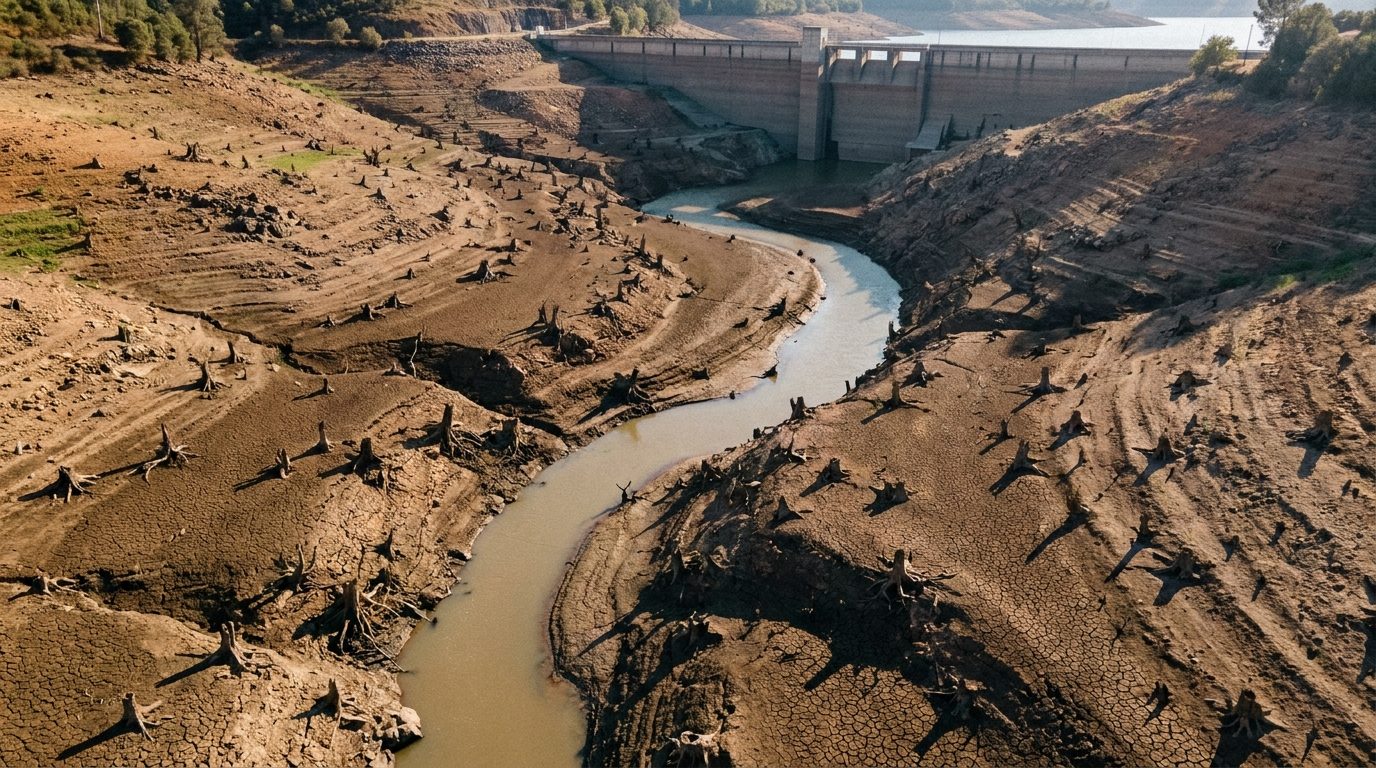
Drought and Water Shortage
Portugal faces recurring droughts that strain water supplies, agriculture and daily life. The Alentejo and Algarve regions are particularly vulnerable, with dam levels frequently dropping below 30% during severe drought years.
Water is not limitless
Portugal experienced severe droughts in 2005, 2012, 2017 and 2022, each lasting months and forcing water restrictions in dozens of municipalities. In 2022, several Algarve dams fell below 15% capacity. Climate projections indicate these episodes will become more frequent and intense. Preparing now is essential.
Understanding drought in Portugal
Most affected regions
- Alentejo: low annual rainfall (400-600 mm), high evaporation rates, large agricultural water demand
- Algarve: tourism increases summer water consumption by up to 300%, limited reservoir capacity
- Trás-os-Montes: hot, dry summers with temperatures exceeding 40°C regularly
- Lisbon and Tagus Valley: high population density strains upstream reservoirs
Dam monitoring (SNIRH)
- Portugal monitors over 60 major dams through SNIRH (Sistema Nacional de Informação de Recursos Hídricos)
- Data updated monthly at snirh.apambiente.pt
- National average storage capacity varies from 80% in winter to under 50% by September
- Critical threshold: below 40% triggers monitoring alerts
Drought alert levels
IPMA classifies drought severity using the Palmer Drought Severity Index (PDSI), which considers precipitation, temperature and soil moisture.
| Level | PDSI Range | Description | Typical measures |
|---|---|---|---|
| Mild | -1.0 to -2.0 | Below-average rainfall | Awareness campaigns, voluntary saving |
| Moderate | -2.0 to -3.0 | Noticeable water deficit | Agricultural irrigation cuts, municipal alerts |
| Severe | -3.0 to -4.0 | Significant shortfall | Garden watering bans, pressure reductions, fines |
| Extreme | Below -4.0 | Crisis conditions | Water rationing, tanker deliveries, emergency declarations |
Water saving techniques
Bathroom (largest use)
- Showers under 5 minutes save up to 80 litres vs a bath
- Turn off the tap while brushing teeth (saves 6 litres/minute)
- Install low-flow shower heads (6-8 L/min instead of 15-20 L/min)
- Dual-flush toilet cisterns use 3-6 litres instead of 9-12 litres per flush
- Fix dripping taps immediately. A drip at one drop per second wastes over 10,000 litres per year
Kitchen
- Run the dishwasher only when full (uses 10-15 L vs 50+ L hand washing)
- Wash fruit and vegetables in a bowl, not under running water
- Reuse cooking water for watering plants once cooled
- Keep a jug of water in the fridge instead of running the tap until cold
- Defrost food in the fridge overnight, not under running water
Outdoors
- Water the garden early morning or late evening to reduce evaporation
- Use drip irrigation instead of sprinklers (up to 50% less water)
- Collect rainwater in barrels for garden use (check local regulations)
- Choose drought-resistant plants: lavender, rosemary, oleander, agapanthus
- Mulch garden beds to retain moisture and reduce watering needs by 25%
Average household water use in Portugal
A Portuguese household uses approximately 180-200 litres per person per day. Bathroom use accounts for about 39%, laundry 12%, kitchen 10%, and outdoor use 10%. During drought restrictions, the target is often reduced to 100-120 litres per person per day.
Emergency water storage
How much to store
- Minimum: 3 litres per person per day for drinking and cooking
- Recommended 72-hour supply: 9 litres per person (3 days x 3 litres)
- Full supply including hygiene: 6 litres per person per day (18 litres for 72 hours)
- Pets: dogs need about 1 litre/day, cats 0.3 litres/day
- Hot weather or physical activity: increase drinking water to 4-5 litres/day
- See our water storage guide for full details
Storage best practices
- Use food-grade containers (HDPE plastic marked with recycling number 2)
- Store in a cool, dark place away from chemicals or petrol
- Rotate stored water every 6 months
- Label containers with the fill date
- If filling from the tap, no treatment needed. Municipal water is already chlorinated
- Consider collapsible water containers (10-20 L) for space efficiency
- A standard bathtub holds 150-300 litres. Fill it when drought warnings escalate
Government restrictions
When drought conditions worsen, municipalities and the government may impose progressive restrictions.
Common restrictions
- Level 1: Ban on garden watering during daytime hours (10:00-20:00)
- Level 2: Complete ban on garden watering and car washing at home
- Level 3: Swimming pool filling prohibited, pressure reductions at night
- Level 4: Scheduled water cuts (rationing), tanker supply to affected areas
- Fines for non-compliance can range from €50 to over €2,500
Agricultural impacts
- Agriculture uses approximately 75% of Portugal's water resources
- Irrigation quotas reduced during drought, with priority given to permanent crops (olive, almond, vine)
- Annual crops (maize, rice) may face complete irrigation bans
- Livestock farmers may need to purchase water by tanker
- Government compensation schemes may be activated for affected farmers
Climate change and the future
Portugal is warming faster than the global average
Climate models project that southern Portugal will experience a 20-30% reduction in annual rainfall by the end of the century. Average temperatures could rise by 2-4°C, increasing evaporation and reducing river flows. The number of drought days per year in the Alentejo is projected to double. Water management and conservation are no longer optional.
What you can do now
- Install water-efficient appliances (washing machine, dishwasher, shower heads)
- Set up rainwater collection for garden and non-potable use
- Convert gardens to drought-resistant landscaping
- Monitor dam levels and IPMA drought reports regularly
- Build an emergency water supply (minimum 72 hours)
- Learn water purification methods for emergencies. See our purification guide
- Support local water conservation initiatives in your municipality
Useful contacts
Emergency
- 112, European emergency number
- ANEPC (Civil Protection): 800 246 246
Water information
- SNIRH: snirh.apambiente.pt
- IPMA: ipma.pt (drought monitoring)
- APA (Environment Agency): apambiente.pt
Related guides
Act before the drought arrives
Do not wait for restrictions to begin saving water. Reduce daily consumption now, store emergency supplies, and fix any leaks in your home. A dripping tap wastes enough water in a year to fill a small swimming pool. Every litre saved today is a litre available tomorrow.