Water calculator
How much water should you store? Water is the most critical resource in an emergency. Calculate how much your family needs and learn about purification methods.
Calculate your needs
How to store water
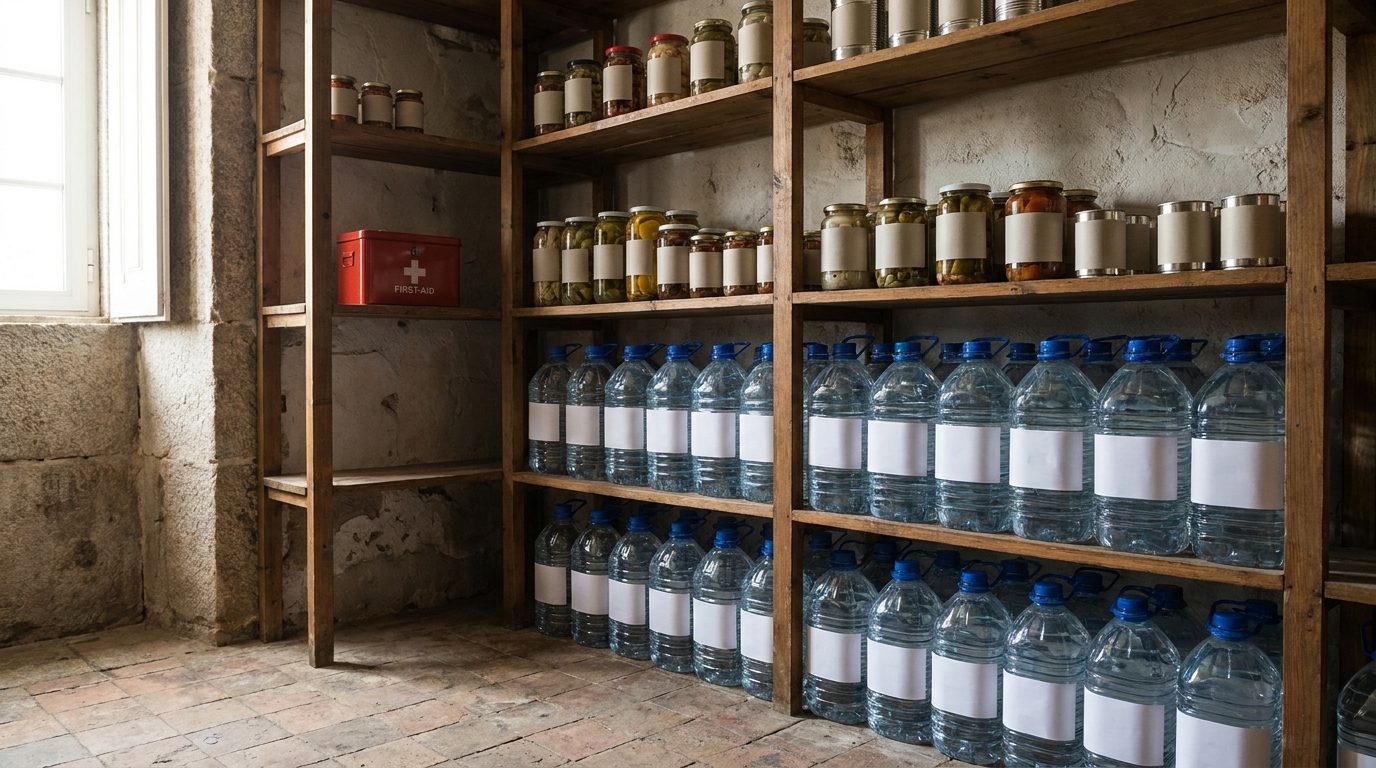
Sealed mineral water jugs last 1 to 2 years. Use 5L or 6L jugs for easier transport and handling.
Rotation: rotate your stock every 6 months using the FIFO method (first in, first out).
Never use milk containers to store water. Milk proteins create an ideal environment for bacteria that are difficult to eliminate.
Storage: keep in a cool, dark place away from chemicals. Sunlight degrades plastic and contaminates the water.
Water purification methods
| Method | How it works | Effectiveness | Cost |
|---|---|---|---|
| Boiling | 1 minute at rolling boil | Kills bacteria and viruses | Free |
| Micropur tablets | 1 tablet per litre, wait 30 minutes | Bacteria and viruses | ~€8-12 per 100 tablets |
| LifeStraw filter | Drink directly or attach to a bottle | Bacteria and parasites | ~€20-30 |
| Sawyer Mini filter | Filters up to 400,000L of water | Bacteria and parasites | ~€30-40 |
| Household bleach | 2 drops per litre of household bleach (2.5% active chlorine, no additives), wait 30 min | Bacteria | Free, plain bleach only |
Recommended products
Sawyer Mini filter
€30-40
Filters up to 400,000 litres. Compact and lightweight, ideal for your bag.
Amazon.es, Decathlon online
Personal LifeStraw
€20-30
Filters up to 4,000 litres. Drink directly from any water source.
Amazon.es, Decathlon
Micropur MP1 tablets
€8-12 (100 units)
1 tablet per litre. Wait 30 minutes.
Decathlon, Amazon.es, pharmacies
Useful tips
Fill the bathtub before a storm. That gives you around 150L of water for hygiene and flushing toilets.
Freeze PET bottles filled with water. They work as ice packs to keep food cold and become drinking water as they thaw.
Your washing machine and water heater contain water that can be used in an emergency for washing or flushing.
Collect rainwater with buckets. Always treat it before drinking (boil or purify).
Golden rule: a minimum of 3 litres per person per day for drinking. With basic hygiene, the ideal is 6 litres. On hot days, increase to 8 to 10 litres.