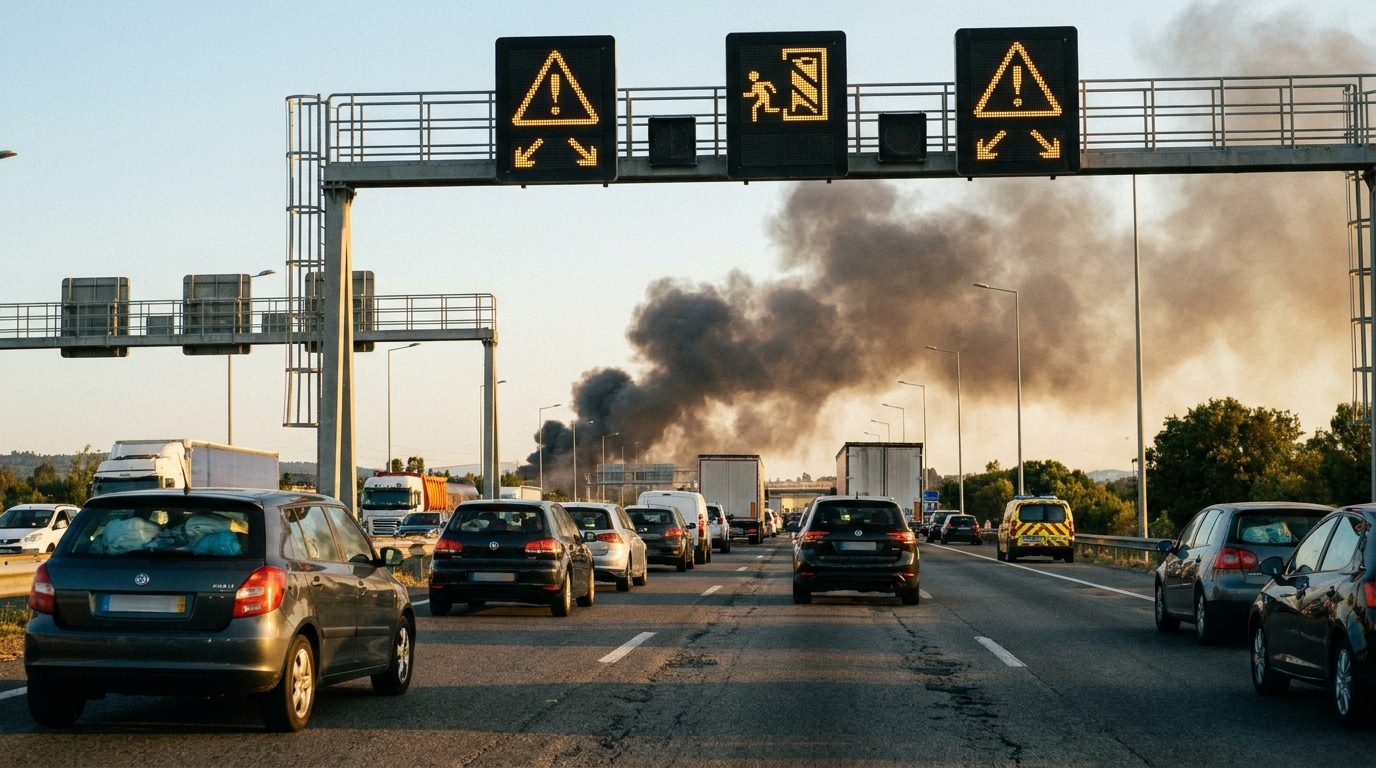
Evacuation plan
The decision to evacuate can save your life. Having a plan means acting fast when every minute counts.
Do not wait until the last moment
Many victims of fires and floods hesitated too long before evacuating. When authorities issue an evacuation order, there is no time to prepare anything. Having everything ready in advance is the difference between evacuating in 5 minutes or 50.
7 steps before leaving home
1
Turn off gas
2
Turn off electricity
3
Close windows
4
Grab documents
5
Grab emergency bag
6
Warn neighbours
7
Exit via planned route
Evacuate or shelter in place?
EVACUATE when
- Authorities order it: Civil Protection (ANEPC), GNR (National Guard), PSP (Police), or Fire Service orders evacuation
- Fire approaching: visible smoke, falling ash, intense heat
- Imminent flooding: water level rising rapidly
- Structural damage: large cracks, leaning walls, sagging floors, risk of collapse
- Gas or chemical leak: strong smell, eye or throat irritation
- Instinct: if you feel unsafe, leave. It is always better to evacuate unnecessarily than to stay and take the risk
STAY when
- Storm without structural risk: heavy rain and wind but the house is safe
- Authorities say shelter in place: confinement order (e.g. toxic cloud)
- Roads blocked: driving may be more dangerous than staying
- Safer indoors: the building is structurally sound and faces no direct threat
- Note: "staying" does not mean ignoring the situation. Stay informed and be ready to evacuate at any moment
Preparing to evacuate
Equipment always ready
- Emergency bag: by the door, always packed (see guide)
- Documents organised: copies in a waterproof pouch (see guide)
- Cash in small notes: ATMs may not work during emergencies
- Sturdy footwear: easily accessible, by the bed or bag (boots or closed trainers)
- Suitable clothing: layers, rain and cold protection
Route planning
- 2 different evacuation routes: the main route may be blocked
- Printed maps: GPS may not work without a mobile signal
- Car fuel tank: always keep it above half full
- Spare fuel can: 5 to 10 litres, stored in a safe, ventilated location
- Know the routes: drive them at least once in normal conditions
- Alternatives to driving: bicycle, on foot, public transport (have a plan B)
Groups with special needs
With children
- Car seats: always fitted and ready
- Comfort items: a favourite toy, dummy, blanket (reduces anxiety)
- Explain calmly: "We are leaving the house to be safe. Everything is OK"
- Buddy system: each child assigned to a responsible adult
- Identification: wristband or card with name and contact number on clothing
With elderly people
- Medication: bring enough for several days with an up-to-date list
- Mobility aids: walking stick, walking frame, wheelchair
- Slower pace: plan extra time for evacuation
- Pre-arranged transport: agree with neighbours or family who will help
- Medical documents: reports and GP contact details
With reduced mobility
- Evacuation chair: for buildings without a lift
- Pre-register: inform your local Civil Protection about special needs
- Practised route: rehearse the evacuation at least twice a year
- Support network: neighbours or friends who can help, identified and contacted
- Medical equipment: spare batteries, replacement parts
With pets
- Carriers ready: cats always in a carrier
- Food and water: for at least 3 days
- Vet documents: vaccinations, microchip
- Animal medication: if applicable
- See the pet emergency guide
What to do when leaving home
7 steps before you leave
- Turn off the gas at the main valve
- Turn off the electricity at the main switch
- Close all windows and doors (slows fire spread and prevents water entry)
- Take your emergency bag and documents
- Wear suitable clothing and footwear (long sleeves, closed shoes)
- Inform neighbours if possible (knock on doors, especially the elderly)
- Follow your planned route, avoid unknown shortcuts
During evacuation
General rules
- Follow official instructions and designated routes
- Stay calm: panic causes accidents and poor decisions
- Keep the group together: do not separate the family
- Stay informed: Antena 1 (radio) or official Civil Protection channels
- Phone: conserve battery, use text messages instead of calls
Specific situations
- Floods: avoid low-lying areas, NEVER drive through water deeper than 15 cm (see guide)
- Fire: drive away from the fire, close car windows, turn on headlights
- If you are stuck: call 112, stay visible (lights, coloured cloth)
- If the road is blocked: turn back and use an alternative route. Do not persist
Meeting points and shelters
Family meeting point
- Set 2 points: one near home (square, school) and one outside the risk zone
- The whole family must know them: including children
- Out-of-area contact: a relative in another city for coordination
- Use the family plan to document everything
Emergency shelters
- ANEPC (the Portuguese Civil Protection Authority) activates emergency shelters during major events
- Contact your local Civil Protection to find shelter locations in your area
- Bring: documents, medication, blankets, phone charger
- Important numbers written on paper: in case your phone runs out of battery
Practise your evacuation
Run a drill with your family at least twice a year. Time how long it takes to gather everything and leave the house. The goal is to be out in under 5 minutes. Involve the children. Do it during the day and at night. The more you practise, the more natural it will feel when you really need it.