Floods
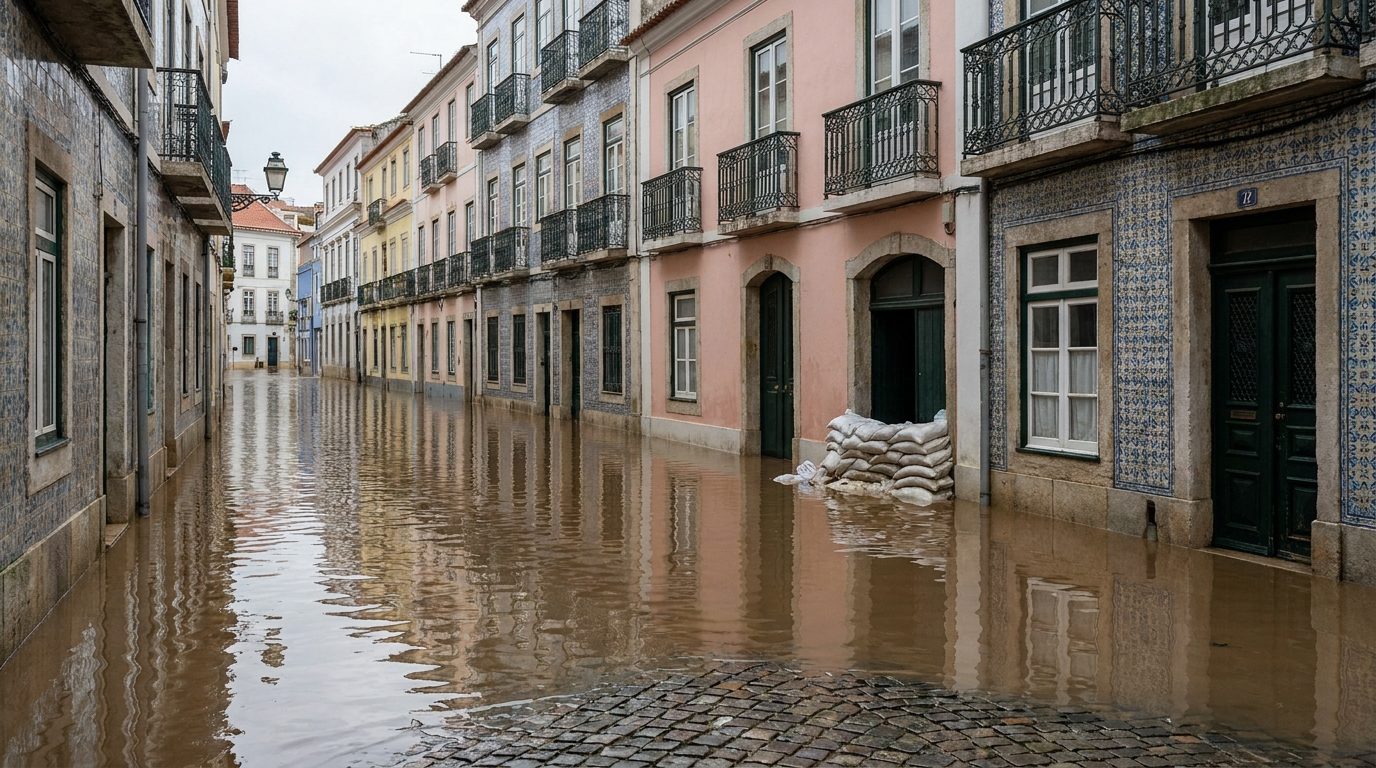
Floods are the most frequent natural disaster in Portugal. Flash floods in urban and riverside areas can occur with little warning and cause devastating damage.
Moving water is extremely dangerous
15 cm of flowing water can knock down an adult. 30 cm can sweep away a car. Storm Kristin (January 2026) caused flooding across multiple districts, demonstrating that floods can happen anywhere in Portugal. NEVER underestimate the force of water.
Risk zones in Portugal
Floodplains
- Tagus Valley (Santarem, Ribatejo)
- Mondego Valley (Coimbra)
- Douro Valley
- Arade and Guadiana rivers (Algarve)
- Areas with a history of periodic flooding
Urban areas
- Lisbon: low-lying areas (Alcantara, Benfica, Avenida Almirante Reis)
- Porto: riverside areas along the Douro
- Algarve: streams in urban areas
- Underpasses and road tunnels
- Areas with heavily sealed/paved ground
Coastal areas
- Risk of coastal overtopping (swell + high tide)
- Costa Vicentina, Nazare, Algarve coast
- Estuaries (Tagus, Sado, Ria Formosa)
- Risk worsened by climate change
Find out if you live in a risk zone
Check your municipality's flood risk maps, available in the Municipal Emergency Plans (at the Camara Municipal or on the ANEPC (Civil Protection) website). If you live in an area that has flooded before, the probability of it flooding again is high.
BEFORE: How to prepare
Protecting your home
- Sandbags: have them ready near doors and garage (EUR 2-5 per bag, or make your own with soil + heavy-duty woven bags)
- Submersible pump: essential for basements (EUR 50-200)
- Check and clean gutters, downpipes and drains twice a year
- Install a non-return valve on the sewer (prevents backflow)
- Raise the electrical panel and sockets above 1 m if possible
- Store documents and valuables on upper floors
- Home insurance with flood coverage (see safety guide)
Planning
- Know the evacuation routes for your neighbourhood
- Identify nearby high ground (tall building, hill)
- Emergency bag ready to go (see guide)
- Know where the electrical panel is and how to turn it off
- Know how to shut off the gas valve
- Photograph belongings and your home (evidence for insurance)
- Follow IPMA alerts during rainy periods
DURING: What to do
Fundamental rules during floods
- DO NOT walk through floodwater: 15 cm of current can knock down an adult
- DO NOT drive on flooded roads: 30 cm of water can sweep away a car. If your car gets trapped in rising water, get out immediately
- DO NOT enter underpasses or tunnels with water. They can fill within minutes
- DO NOT touch electrical equipment if you are in contact with water
- DO NOT go down to basements or garages during flooding
If water rises in your home
- Move to an upper floor or the highest point in the house
- Turn off the electrical panel if possible without stepping in water
- Shut off the gas
- Take your emergency kit, mobile phone, documents
- Place sandbags against doors
- If possible, raise appliances and valuables
- Call 112 if you need rescue
- DO NOT try to swim in floodwater
If you are in a car
- DO NOT enter flooded roads. "Turn around, don't drown"
- If your car is caught by water: turn off the engine, open the window or door IMMEDIATELY
- If the door won't open: break the side window (emergency hammer in the car, see car kit)
- Get out of the car and seek high ground
- DO NOT try to save the car. Save yourself
AFTER: Recovery
Immediate safety
- DO NOT drink tap water until its safety is confirmed
- Use bottled or boiled water for drinking and cooking
- DO NOT turn on electricity until an electrician has inspected the system
- Watch out for dangerous animals washed in by floodwater (snakes, rats)
- Floodwater is CONTAMINATED: sewage, fuel, chemicals
- Wear waterproof boots, gloves and a mask when cleaning
- Disinfect everything with diluted bleach
Home recovery
- Dry everything within 24-48 hours to prevent mould
- Use dehumidifiers, fans, open windows
- Photograph and document ALL damage before cleaning
- Contact your insurer immediately
- Discard any food that has been in contact with floodwater
- Check the building's structural integrity (cracks, subsidence)
- Request assistance: Camara Municipal, ANEPC (Civil Protection), Social Security
Mould after flooding
Mould begins to grow within 24-48 hours. If drying is not immediate, it can become a serious health problem, especially for people with asthma or allergies. Porous materials that cannot be fully dried (mattresses, carpets, insulation) should be discarded. Affected plasterboard walls may need to be cut 30 cm above the waterline.
Contacts
Emergency
- 112, Emergency
- ANEPC (Civil Protection): 800 246 246
- Local fire brigade
Alerts
- IPMA (meteorology): ipma.pt
- SNIRH (river levels): snirh.apambiente.pt
- Alerts guide
Support
- Social Security: 300 502 502
- Camara Municipal (local support)
- All contacts
Climate change and floods
Forecasts indicate that Portugal will experience more frequent heavy rainfall events in the coming decades, alternating with periods of drought. This means more flash floods, with higher flow rates and in areas where they were previously rare. If you live in an area that has flooded before, the probability of it happening again is increasing. Be prepared.