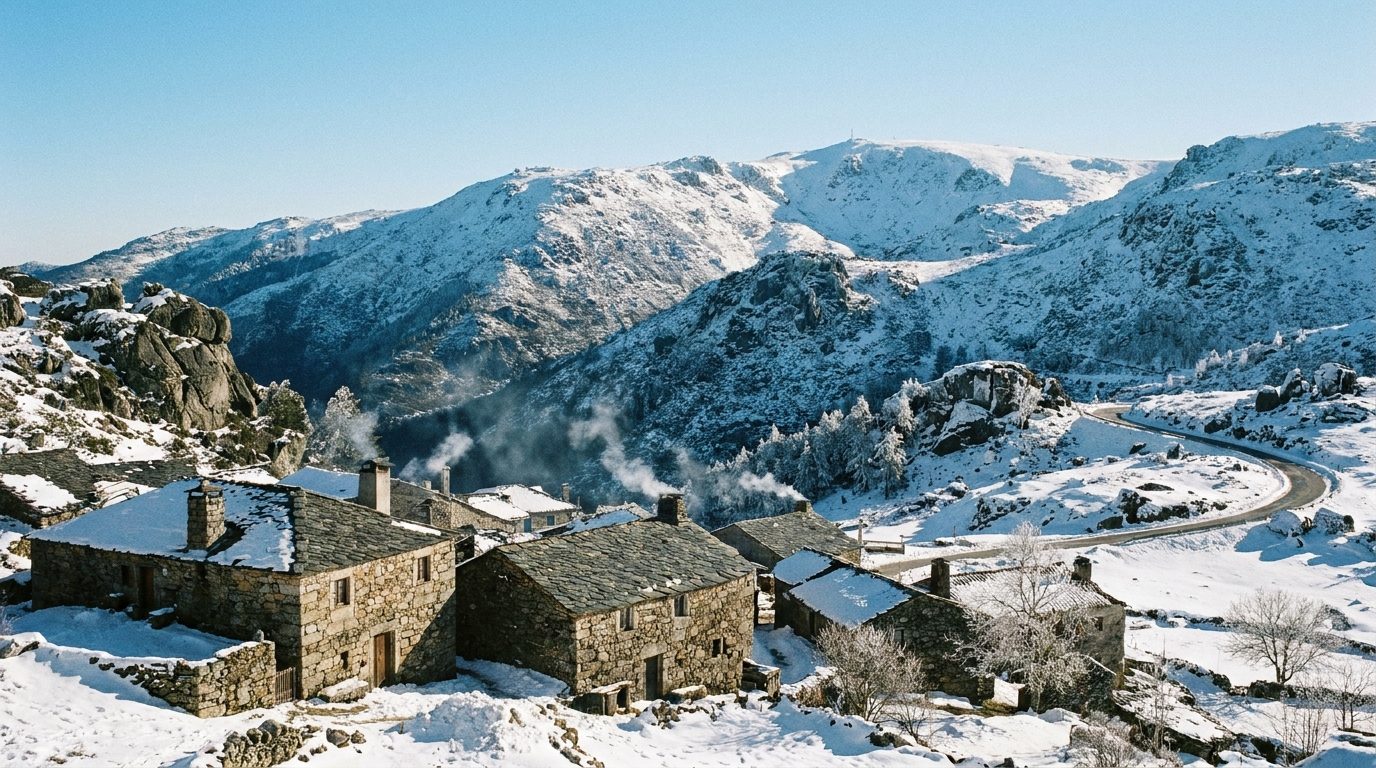
Cold and snow
More people die from cold than from heat in Portugal. Cold snaps, snow and ice can isolate communities, block roads and cause hypothermia. Proper preparation protects your family.
Cold kills silently
In Portugal, more people die from cold than from heat, mainly elderly people in poorly insulated homes. In January 2026, storm Ingrid brought snow down to 400 metres altitude, schools were closed, roads were blocked and communities were isolated in the north and centre of the country. Preparing for extreme cold can save lives.
Flowchart: cold snap / snow, what now?
Extreme cold / snow alert
Are you outdoors?
YES
Seek heated shelter immediately
Protect extremities (hands, feet, ears, nose)
If uncontrollable shivering: risk of hypothermia
NO
Do you have working heating?
YES
Are pipes at risk of freezing?
YES
Leave taps dripping
Open cupboard doors where pipes run
NO
Keep the house heated (min. 18 degrees C)
NO
Gather the family in one room
Use layers of clothing and blankets
Do NOT use a brazier/barbecue indoors (CO poisoning)
Cold risks in Portugal
North and Centre
The regions most affected by extreme cold and snow:
- Frequent snowfall above 600 metres altitude
- In 2026, storm Ingrid brought snow down to 400 metres
- Roads regularly blocked in winter (IP2, EN2, mountain roads)
- Rural communities isolated, many of them elderly
Serra da Estrela
Extreme conditions that require special preparation:
- Temperatures can drop to -10 degrees C or lower
- Roads blocked for days by snow and ice
- Tourists frequently caught without proper equipment
- Strong winds with wind chill far below the actual temperature
Urban areas
Urban cold has its own often-underestimated risks:
- Homeless people at extreme risk of hypothermia
- Elderly people isolated in poorly insulated homes
- Homes without adequate heating (Portugal is among the worst in the EU)
- Excess winter mortality: thousands of preventable deaths
Madeira and Azores
Although rarer, Atlantic cold snaps also affect the islands:
- Occasional snow at the highest points of Madeira (Pico do Areeiro)
- Azores with cold snaps and rough seas
- Isolation made worse by insularity
- Less preparation of the population for extreme cold
Hypothermia and frostbite
Recognise and act
- Signs of hypothermia: uncontrollable shivering, confusion, slurred speech, extreme drowsiness, loss of coordination
- First aid: move to a warm place, remove wet clothing, warm gradually with blankets, give warm drinks (never alcohol), call 112
- Frostbite: white or bluish skin, numbness, tingling followed by pain. Do NOT rub the affected area, warm gradually in lukewarm water (37-39 degrees C)
- At-risk groups: elderly, young children, homeless people, outdoor workers, people with chronic conditions
BEFORE: Preparation
Prepare your home
- Insulation: seal windows and doors, use draught excluders and thermal curtains
- Heating: service your boiler/heater before winter, clean the chimney
- Pipes: insulate exposed pipes with foam or insulating material
- Salt for ice: keep a supply of coarse salt to de-ice access paths
- Firewood/gas: maintain a supply sufficient for several days
- Carbon monoxide detector: install near combustion sources
Winter car kit
- Antifreeze: check level and concentration
- Emergency blanket: keep one in the boot
- Snow chains: mandatory on some roads, practise fitting them
- Torch: with spare batteries
- Ice scraper: for the windscreen
- Water and food: energy bars, bottle of water
- Phone charger: fully charged power bank
DURING: How to act
At home
- Safe heating: never use a brazier or barbecue indoors
- Carbon monoxide: symptoms include headache, nausea, dizziness. Ventilate and leave immediately
- High-calorie food: hot and frequent meals, warm drinks
- Gather in one room: if no heating is available, use a single room with the whole family
- Dress in layers: several thin layers keep you warmer than one thick one
- Check on elderly neighbours: call or visit regularly
On the road
- Reduce speed: black ice is invisible, brake gently
- Following distance: at least three times the normal distance
- Snow chains: fit them before you need them, not when you are already stuck
- If stuck in the snow: stay in the car, run the heater periodically (check that the exhaust is not blocked), turn on hazard lights
- Avoid unnecessary travel: the best protection is not to go out
- Check road conditions: consult estradas.pt
Safe heating
Deadly dangers of inadequate heating
- NEVER use a brazier or barbecue indoors: carbon monoxide (CO) kills dozens of people every winter in Portugal
- Carbon monoxide is invisible and odourless: you cannot see or smell it, but it kills within minutes
- Fireplaces: keep the chimney clean (clean annually), never fully close the ventilation with the fire lit
- Electric heaters: keep away from curtains, furniture and clothes. Do not cover them. Do not use extension leads
- Gas heaters: ensure adequate ventilation, check the hose and connections annually
Protecting pipes
Preventing pipes from freezing
- Insulate exposed pipes: use foam insulation, newspaper or rags on external pipes or those in unheated areas
- Leave taps dripping: on very cold nights, the movement of water makes freezing harder
- Shut off outdoor taps: if possible, close the garden tap and drain the residual water
- Open cupboard doors: under sinks and basins to allow warm air to circulate
- If pipes have frozen: do NOT use an open flame. Use a hairdryer, warm towels or a heating tape. Open the tap to relieve pressure
- If a pipe has burst: immediately shut off the main water valve and call a plumber
Useful contacts
Emergency contacts
- 112: European emergency number
- Civil Protection: 800 246 246
- IPMA: ipma.pt (weather alerts)
- Road conditions: estradas.pt
- GNR: 213 217 000 (information about blocked roads)
- All emergency contacts
Related articles
- Severe storms - frequently associated with cold snaps
- Power outages - snow and ice can cause prolonged blackouts
- Living without electricity - how to survive extended power cuts
- Elderly and vulnerable - groups most at risk in the cold
- Emergency bag - what to always have ready
- Car kit - preparing your vehicle for winter